Multicultural Wedding Photography Examples
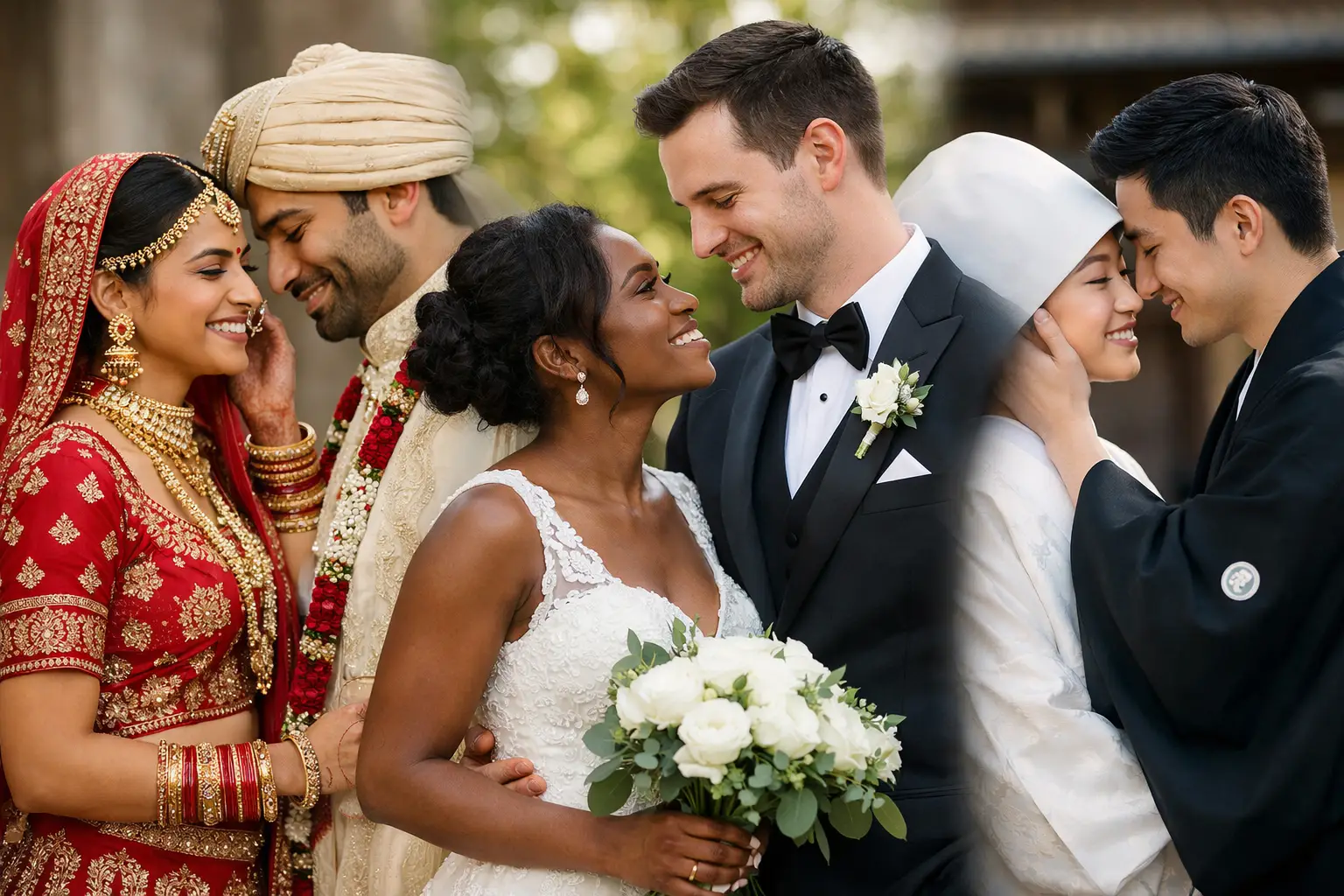
A bride changes from a richly embroidered lehenga into a white reception gown. A groom’s grandmother adjusts the cuff of his tuxedo before a Chinese tea ceremony. Two families, speaking different first languages, fill the dance floor around the same couple. These are the moments that make multicultural wedding photography examples far more meaningful than a collection of beautiful portraits. They show how a wedding feels when separate histories, customs, and families come together in one room.
For couples planning a celebration in Washington, DC, Maryland, or Northern Virginia, the goal is rarely to make every tradition look identical. The goal is to preserve each one with respect, context, and the emotional truth of the day. Exceptional photography gives equal care to the quiet preparation, the formal ceremony, the family rituals, and the unplanned joy that happens between them.
What Multicultural Wedding Photography Should Reveal
A multicultural wedding often moves at a richer pace than a conventional single-ceremony timeline. There may be multiple outfits, several religious or cultural traditions, two ceremonies, or a reception that intentionally blends both families’ customs. The strongest images do not treat these elements as visual props. They document who is leading the ritual, who is watching closely, and why that moment matters.
That distinction is especially important with heritage details. A close photograph of henna, a ketubah, a lasso, ceremonial tea, a chuppah, traditional attire, or family heirloom jewelry can be striking. Yet the image becomes more powerful when it also includes the hands that placed it there, the parent offering guidance, or the expression of the person receiving it.
Photojournalistic coverage is particularly valuable here because many of the most resonant moments cannot be recreated. A father’s reaction as his daughter enters in traditional dress happens once. So does the laughter when relatives teach new in-laws a dance, or the embrace between families after vows in two faith traditions. Thoughtful direction has its place, especially for family portraits, but the heart of the story must remain natural.
Multicultural Wedding Photography Examples That Tell a Story
The following examples illustrate the kinds of images that create a complete, personal record of a multicultural celebration. They are not a checklist. Every couple should decide which traditions are essential to document and where they would prefer the day to unfold without interruption.
Two ceremonies, one emotional arc
Some couples hold separate ceremonies to honor different faiths or cultural backgrounds. For example, a Jewish ceremony beneath a chuppah may be followed by a Hindu ceremony with a mandap, or a civil ceremony may be paired with a traditional Korean paebaek. Each ceremony deserves its own visual rhythm.
The photographic story can begin with the changing of attire and continue through the contrast in settings, symbolism, and family participation. Wide images establish the environment and scale of each ceremony. Close moments preserve the exchange of vows, blessings, garlands, rings, or meaningful glances. The transition between ceremonies matters, too. It often reveals the couple catching their breath, their wedding party helping with wardrobe changes, or parents sharing a private moment of pride.
A tea ceremony shaped by family connection
Chinese tea ceremonies are a clear example of why context matters. The formal exchange of tea is visually elegant, but its deeper value lies in the act of honoring elders and welcoming families. A complete set of photographs may include the preparation of the tea service, grandparents waiting together, the couple kneeling or bowing, hands receiving cups, and the warm, often emotional reactions that follow.
There is a practical consideration: these ceremonies can take place in compact homes, hotel suites, or busy reception spaces. An experienced photographer works discreetly in close quarters, anticipates the sequence, and avoids interrupting the exchange. The resulting images should feel intimate rather than crowded.
Indian wedding color, movement, and ceremony
Indian weddings offer extraordinary visual energy, from a baraat arriving with music and dancing to a ceremony layered with sacred rituals. A photographer needs more than an eye for color. They need awareness of when to step forward for a decisive moment and when to let the ritual proceed without distraction.
Meaningful examples might include the groom’s family welcoming the bride, the bride’s entrance, the exchange of garlands, a parent’s emotional blessing, and the circle of guests watching the couple during the pheras. At the reception, portraits can honor the craftsmanship of the attire and décor, while candid photographs preserve the genuine exuberance of the dance floor.
The trade-off is time. Elaborate garments, large family groupings, and multiple events can make a schedule feel ambitious. Building in a realistic window for portraits protects the experience without taking the couple away from their guests for too long.
Latin American traditions with room for celebration
A multicultural wedding incorporating Mexican, Colombian, Salvadoran, Puerto Rican, or other Latin American heritage may include traditions such as the lazo, arras, mariachi, a lively hora loca, or family dances with deep personal significance. The most memorable photographs connect the ritual to the people who carry it forward.
During a lazo ceremony, for instance, the image is not only about the rosary or floral cord around the couple. It is also about the loved ones chosen to place it and the couple’s response to their participation. When mariachi musicians begin to play, a wider frame can capture the atmosphere, while closer images reveal guests singing, grandparents tapping their feet, and the couple enjoying the surprise they planned together.
Blended traditions at one reception
Not every multicultural wedding includes two formal ceremonies. Sometimes the blend appears most clearly at the reception: a Persian knife dance before the cake cutting, a Jewish hora, a Nigerian money dance, a Vietnamese áo dài change, or music that shifts from one family’s favorites to the other’s.
These transitions are ideal for documentary photography. Guests may not know exactly what comes next, which makes their reactions honest and expressive. The photographer’s role is to recognize the buildup, position carefully, and preserve both the centerpiece moment and the surrounding circle of people experiencing it.
Planning for Images That Feel True to You
The best preparation begins with a conversation, not a shot list. Tell your photographer which rituals have spiritual, familial, or personal importance. Explain who the key participants are and whether there are moments that require particular discretion. If a ceremony has rules about where a photographer may stand, flash use, or movement during prayer, that information should be shared well before the wedding day.
A concise timeline is equally valuable. Note the start time and approximate duration of each tradition, outfit change, procession, and family portrait session. Cultural events do not always run to the minute, and that is perfectly normal. The photography plan should have structure while leaving room for the organic moments that make the day yours.
Consider family portraits with care. Large, multigenerational groups are often a priority at multicultural weddings, especially when relatives have traveled from across the country or abroad. Assigning one knowledgeable family member to help gather people can make this portion of the day efficient and relaxed. A photographer can then create polished portraits without sacrificing the candid coverage happening elsewhere.
It also helps to discuss visual priorities. Some couples want editorial portraits that highlight fashion, venue architecture, and carefully chosen details. Others care most about tears, laughter, dance, and unguarded family interactions. Most want a balance. A personalized approach makes room for both, rather than forcing a celebration with many layers into a generic formula.
Experience Creates Confidence in Complex Celebrations
A wedding photographer does not need to share a couple’s background to document it beautifully. They do need curiosity, preparation, humility, and the confidence to work calmly within a complex schedule. Asking informed questions beforehand is a sign of professionalism, not uncertainty.
With more than 30 years of wedding and event storytelling, Rodney Bailey approaches each celebration as its own family history in motion. That means respecting established traditions while remaining alert to the spontaneous moments that cannot be planned: the sibling who tears up during a blessing, the elder who starts the first dance, the two families realizing they are no longer strangers.
The images couples return to years later are often the ones that hold several truths at once. They show the beauty of a tradition, the people entrusted to uphold it, and the unmistakable joy of beginning a life together. Give those moments time, communicate what matters most, and choose a photographer who knows how to see beyond the ceremony to the family story unfolding around it.
Related Posts