12 Questions to Ask an Event Photographer
A photographer can have a beautiful portfolio and still be the wrong fit for your celebration. The most useful questions to ask an event photographer reveal how they work under pressure, how they read a room, and whether they can preserve the moments that will matter most after the guests have gone home.
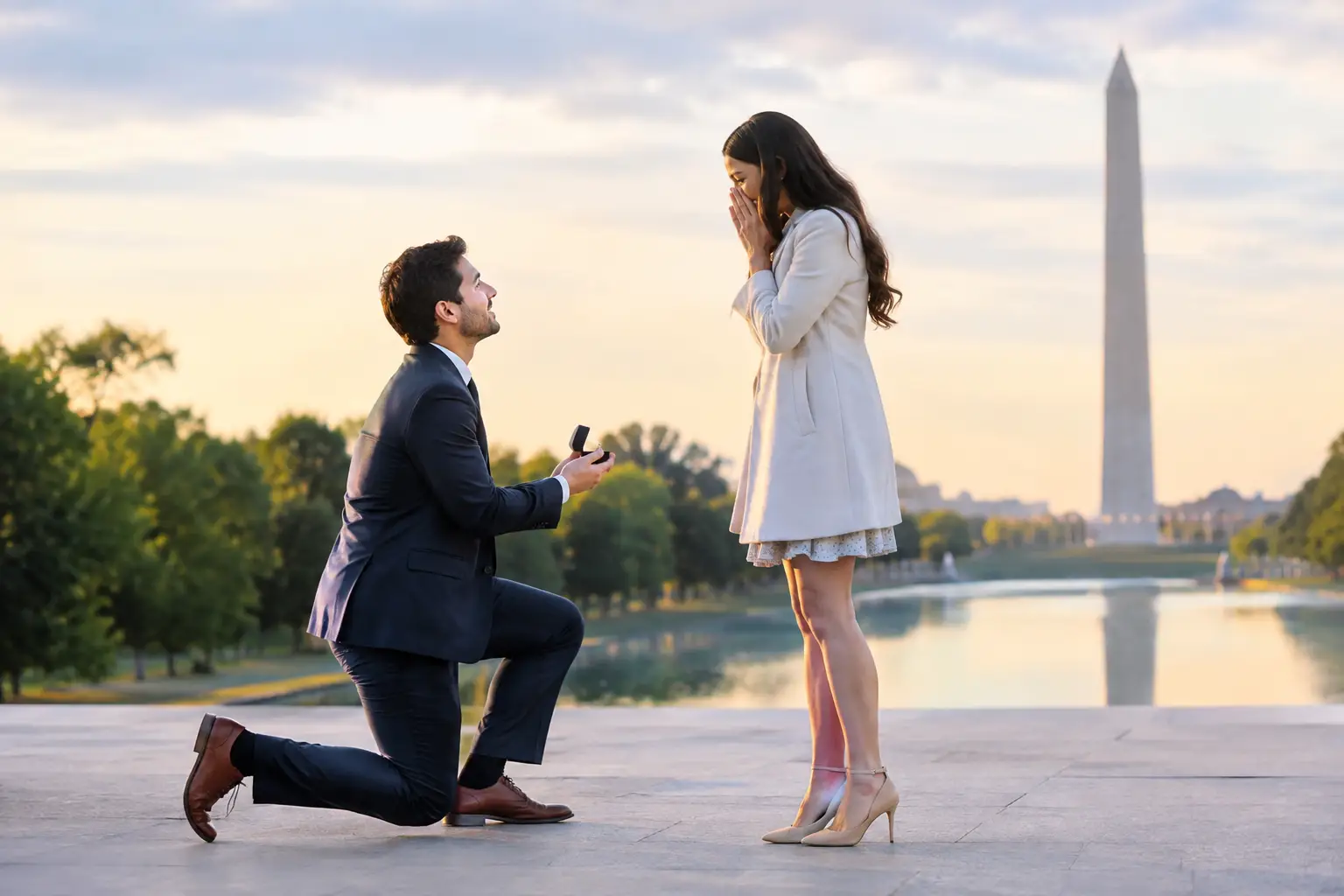
For a wedding, mitzvah, proposal, gala, or corporate gathering in Washington, DC, the best choice is rarely based on price alone. It is about confidence: knowing your photographer will be prepared, discreet, and fully present for the emotion and energy of the day.
Questions to Ask an Event Photographer Before You Book
1. Will you personally photograph our event?
This question is especially important when you are drawn to a studio because of one photographer’s particular eye. Some studios use associate photographers, which can be an excellent option when managed thoughtfully, but you should know exactly who will arrive and who will be responsible for your images.
Ask to see a complete event gallery from the photographer who will be assigned to you. A highlight reel shows artistic potential. A full gallery shows consistency, timing, and how a photographer handles every part of an event, including low-light receptions, family portraits, and unplanned moments.
2. Have you photographed events like ours?
Experience should be relevant, not merely extensive. A photographer who excels at a fast-moving wedding reception may also be excellent at a corporate gala, but the priorities can differ. A proposal requires discretion and precise planning. A bar or bat mitzvah demands awareness of meaningful traditions, family dynamics, and a dance floor that can change pace in an instant.
Ask what similar events they have covered and what they learned from them. You are looking for more than familiarity with a format. You want a professional who understands where the emotion, protocol, and visual opportunities are likely to emerge.
3. How would you describe your photography style?
Terms such as “candid,” “editorial,” and “photojournalistic” are often used broadly. Ask the photographer to explain what those words mean in practice. Do they direct people constantly, or do they observe and anticipate? How do they approach portraits? How much retouching do they apply?
For many clients, the goal is imagery that feels natural and elevated: genuine laughter during cocktail hour, a parent’s expression during a toast, the spontaneous movement of a crowded dance floor, and polished portraits that never feel stiff. The right photographer should be able to balance thoughtful direction with room for real life to happen.
4. What is your approach to portraits and family groupings?
Even clients who want documentary coverage usually need a few organized photographs. For weddings, that may include immediate family, wedding party, and couple portraits. For milestone celebrations, it may mean grandparents, siblings, hosts, and honored guests.
Ask how the photographer keeps this portion of the day efficient. An experienced professional will help create a realistic list, suggest the right timing, and work with a designated family member or planner when needed. The trade-off is simple: a longer list requires more time. Clear priorities prevent portrait time from taking over the celebration.
5. How much coverage do you recommend, and why?
The answer should be tied to your actual timeline, not a generic package. A photographer should ask when guests arrive, when key remarks or rituals occur, whether there is a first look or private moment planned, and how late the energy of the party is expected to run.
For a corporate event, coverage may need to begin before doors open to capture branding, room design, and sponsor details. For a wedding, leaving too early can mean missing the most relaxed and joyful moments of the reception. Ask what would be missed at different coverage levels, then choose based on the story you want documented.
6. How do you handle difficult light and fast-changing conditions?
Washington-area events often move between spaces: a bright outdoor ceremony, a dim ballroom, a rooftop cocktail hour, or a historic venue with mixed lighting. A strong photographer does not simply react to those conditions. They prepare for them.
Ask how they light portraits after dark, photograph a dance floor without making it feel like a production, and preserve the atmosphere of a candlelit room. Their answer should reflect both technical fluency and restraint. The goal is not to flatten every room with flash, but to create clear, flattering images that still feel true to the setting.
7. What is your backup plan?
This is one of the most practical questions to ask an event photographer, and one of the most revealing. Professional preparation includes backup camera bodies, lenses, lighting, memory cards, batteries, and a dependable process for backing up files after the event.
Ask what happens if the photographer becomes ill or encounters an emergency. No one can control every circumstance, but an established studio should have a credible contingency plan and a professional network. Reassurance comes from specific answers, not vague promises.
8. How do you work with planners, venues, and other vendors?
Exceptional event photography is collaborative. A photographer should coordinate smoothly with your planner, videographer, venue team, entertainment, and anyone managing the event schedule. That does not mean asking permission to do their job. It means knowing when to lead, when to adapt, and how to avoid competing with other professionals for the same moment.
Ask how they communicate before the event and on the day itself. The best teams are calm and organized, helping the schedule move forward without making clients feel managed.
9. What will we receive, and how are the images edited?
Clarify the deliverables before signing an agreement. Ask whether you will receive high-resolution digital files, an online gallery, printing rights, albums, or other finished products. It is also reasonable to ask for an estimated image range, although the final number should be driven by the event rather than an arbitrary quota.
Editing deserves equal attention. You want consistent color, flattering skin tones, and images that retain the mood of the day. Be cautious if extensive manipulation is the primary selling point. Timeless photographs usually begin with strong composition, good light, and authentic expression.
10. When will we receive our photographs?
Turnaround time varies by season, event length, and the scope of editing. Ask when you can expect the complete gallery and whether a small preview is available sooner. This can be particularly helpful for couples eager to share a first look at their wedding images or organizations that need select photographs for a post-event recap.
If timing is critical, discuss it in advance. Corporate teams may need a defined delivery schedule, while social clients may value a few early favorites alongside a carefully finished full collection.
11. What are the usage and privacy terms?
For personal events, ask how you may print, share, and archive the images. For corporate and nonprofit events, clarify who can use photographs for marketing, press, social media, annual reports, and sponsor communications.
Privacy also matters. A private family celebration may require discretion, while a high-profile event may have guest restrictions or approval procedures. A professional photographer should be comfortable discussing these considerations clearly and respectfully before the event.
12. What is included in the investment, and what could change the final cost?
A clear proposal should identify coverage hours, the number of photographers, travel expectations, deliverables, and any applicable taxes or fees. Ask about overtime, additional editing, albums, expedited delivery, and costs that may arise if the timeline changes.
The least expensive quote is not always the best value, particularly for a once-in-a-lifetime event. Experience, preparation, and a calm presence can protect the photographs you cannot recreate. At the same time, the right photographer should make pricing understandable and help you select coverage that fits your plans rather than pushing unnecessary additions.
Let the Conversation Tell You Something
Pay attention not only to the answers, but also to the questions the photographer asks you. Do they want to know what matters most to your family, which traditions are meaningful, who should never be missed, and how you want the images to feel? That curiosity is often the beginning of thoughtful storytelling.
For more than 30 years, Rodney Bailey has approached weddings and events with that same client-first attention: careful preparation, polished professionalism, and a commitment to the unrepeatable moments that make each gathering personal. Choose the photographer who gives you the confidence to stop worrying about the photographs and simply be present for your celebration.
Related Posts