When Should Wedding Photos Start on Your Day?
A wedding day can feel wonderfully full before the ceremony has even begun: a parent seeing you dressed, friends sharing a quiet laugh in the suite, the final adjustment to a veil or cufflink. So, when should wedding photos start? Earlier than many couples expect, but not so early that the day begins to feel like a production instead of a celebration.
The right start time is less about a fixed rule than a thoughtful plan. It should account for your ceremony time, travel between locations, seasonal daylight, the size of your wedding party, family dynamics, and the kind of images you value most. For couples who want natural, photojournalistic storytelling alongside polished portraits, a well-built photography timeline creates room for both.
When Should Wedding Photos Start? Begin With the Ceremony
Start by working backward from the ceremony. In most cases, photography begins two to three hours before the ceremony. That window gives your photographer time to document meaningful getting-ready moments, photograph details such as attire, stationery, rings, and florals, and create relaxed portraits before guests arrive.
For a 5:30 p.m. ceremony, a typical photography start time may be between 2:30 and 3:30 p.m. A shorter coverage plan or a bride and groom getting ready at the same hotel may allow for a later start. A large wedding party, separate locations, complex transportation, or an early first look may call for more time.
The objective is not to fill every minute with posed photographs. It is to allow the day to unfold without rushing the moments you will want to remember.
The getting-ready coverage that matters
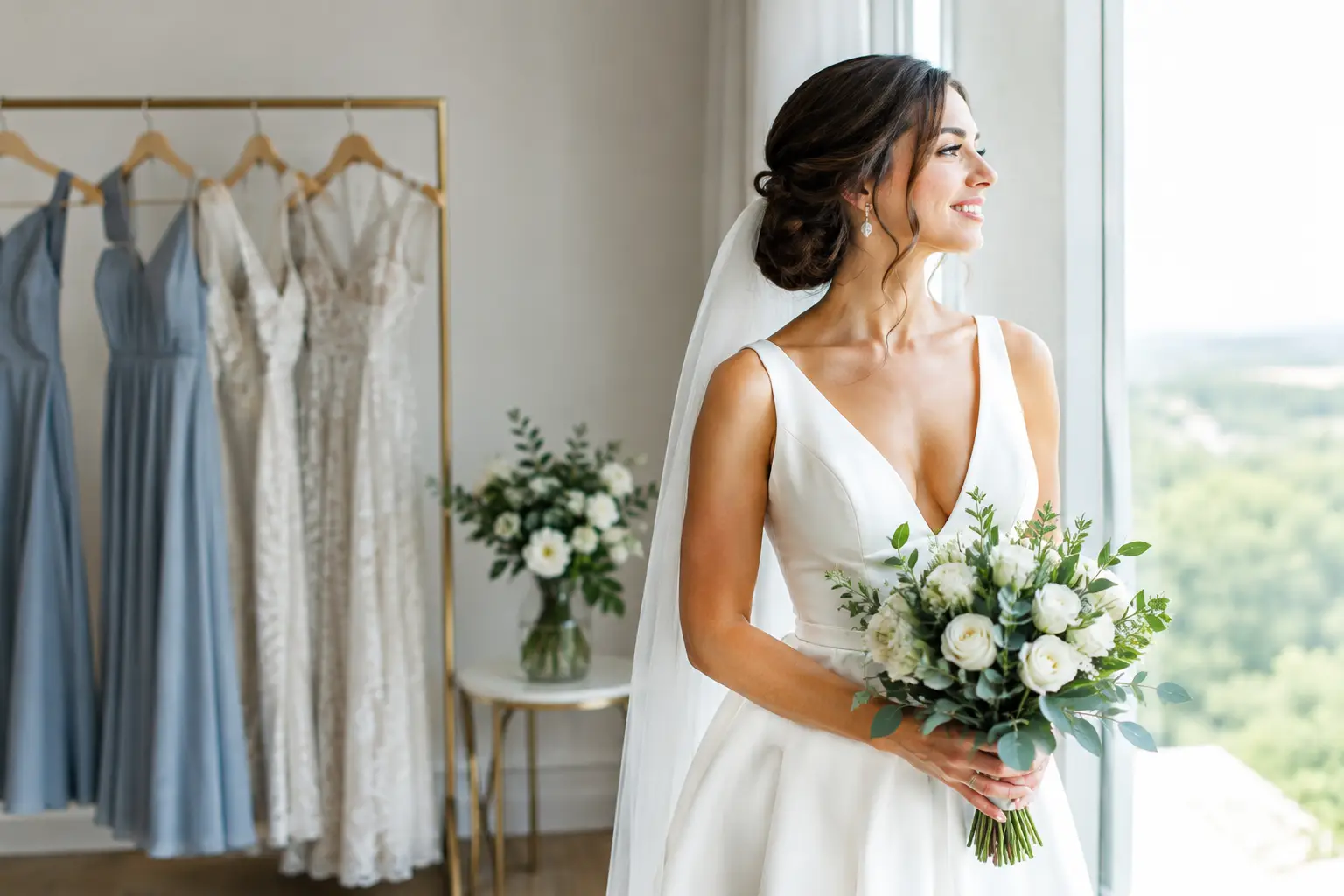
The first portion of the day is often where the emotional texture begins. A photographer can document the setting, the dress or suit, heirloom jewelry, handwritten notes, bouquets, and the people helping you prepare. But the most enduring images usually happen in between those expected moments: a sibling’s expression, a toast from a longtime friend, or a parent pausing at the doorway.
Most couples benefit from allowing 60 to 90 minutes for these photographs. If both partners are getting ready at different locations, build in enough coverage for a photographer or photography team to document each experience without forcing an unnecessarily tight schedule.
Keep detail items together in advance. Rings, invitation suites, shoes, cufflinks, family heirlooms, and loose florals are easier to photograph beautifully when they are gathered in one place. That small act of preparation protects time for the candid moments that cannot be recreated.
Decide Whether a First Look Fits Your Wedding
A first look is one of the most important decisions affecting your photography timeline. Seeing each other before the ceremony allows you to complete couple portraits, wedding party photographs, and often immediate-family groupings beforehand. It can free you to move from the ceremony into cocktail hour with your guests, rather than spending most of that hour away from them.
For many couples, it also creates a private pause in an otherwise fast-moving day. The first look does not replace the ceremony entrance. It simply gives you a quiet, unrushed moment together before the larger celebration begins.
That said, a first look is personal, not required. Some couples want their first sight of one another to happen at the ceremony, particularly when tradition or faith is central to their day. With a strong timeline, that choice can work beautifully. It simply means reserving more time after the ceremony for portraits and accepting that cocktail hour may be shorter for you.
A useful middle ground is a first touch or private letter exchange. You can share a meaningful moment without seeing one another before the ceremony, while still creating photographs with genuine emotion.
Build Time for Portraits Without Making Them Feel Staged
Portraits are not the opposite of candid photography. They are an opportunity to slow down, notice the significance of the day, and create images that will live on walls and in albums for generations. The key is allowing enough time for direction without turning portrait time into a long series of rigid poses.
For couple portraits, plan for approximately 30 to 45 minutes, ideally divided across the day. An initial session before the ceremony can cover the essential images. Then, if the schedule permits, step out for 10 to 15 minutes around sunset. That brief second session often produces some of the day’s most striking images, particularly at Washington, DC venues with gardens, terraces, historic architecture, or skyline views.
Wedding party portraits generally take 20 to 30 minutes, depending on the number of people involved. Immediate-family formal photographs often require another 20 to 30 minutes. Family groupings are most efficient when you provide a concise list in advance and designate one person who knows everyone to help gather relatives.
The trade-off is simple: more portrait time creates more variety, while a shorter portrait window gives you more time with guests. A thoughtful photographer will help you decide where the balance belongs for your celebration.
Let the Light Shape the Schedule
In the DC, Maryland, and Northern Virginia region, light can change a wedding-day plan dramatically. Summer sunlight stays bright well into the evening, while late-fall and winter sunsets arrive much earlier. A 5:00 p.m. November ceremony can leave very little daylight afterward. In that scenario, pre-ceremony portraits or a first look may be especially valuable.
Indoor venues introduce another layer of planning. Ballrooms, museums, hotels, private clubs, and houses of worship each have distinct lighting conditions. Some offer grand window light during the afternoon; others require a refined approach to supplemental lighting once the sun goes down. A seasoned photography team will evaluate the venue, identify the most flattering portrait locations, and build a plan that respects both the environment and the flow of your event.
Weather deserves consideration, too. A rain plan should include more than umbrellas. It should identify covered portrait locations, travel buffers, and indoor spaces where your group can remain comfortable. The best contingency plans do not feel like compromises. They simply give the day another beautiful path forward.
A Sample Timeline for a 5:30 p.m. Ceremony
A sample schedule can make the timing easier to visualize. This is not a formula, but it reflects the comfortable pacing many couples prefer.
- 2:45 p.m. Photography begins with details and getting-ready candids.
- 3:45 p.m. Final preparations, dressing, and parent or wedding-party reactions.
- 4:15 p.m. First look, if desired, followed by couple portraits.
- 4:45 p.m. Wedding party and immediate-family photographs.
- 5:15 p.m. Partners are tucked away; guests begin arriving.
- 5:30 p.m. Ceremony begins.
- 6:00 p.m. Ceremony ends, followed by any remaining family photos.
- 6:15 p.m. Cocktail hour, greetings, or a brief golden-hour portrait session.
If you choose not to have a first look, photography may start at the same time, but pre-ceremony coverage will focus on individual preparations and separate portraits. Plan for couple, wedding party, and family photographs immediately after the ceremony, with a realistic understanding of how much cocktail hour you may miss.
Protect the Moments Between the Scheduled Ones
The most memorable wedding photographs are rarely limited to the timeline’s formal blocks. They appear during the embrace after the ceremony, the spontaneous dance floor reaction, the laughter at a crowded dinner table, and the glance exchanged during a speech. A schedule should provide structure, but it should never crowd out the life of the day.
Avoid stacking too many activities into the final hour before the ceremony. Late hair and makeup, missing boutonnieres, delayed transportation, and last-minute requests can quickly consume a timeline that looked generous on paper. A 15-minute buffer is not wasted time. It is what keeps a small delay from becoming a stressful one.
More than 30 years of wedding photography experience has shown Rodney Bailey that the strongest images come from preparation paired with flexibility. When couples have a clear plan, they are free to be present with the people they invited to celebrate.
Your photography start time should leave room for more than pictures. It should leave room for a deep breath, a quiet handhold, and the possibility that the unscripted moment becomes the image you treasure most.
Related Posts