
When Should Proposal Photos Be Scheduled?
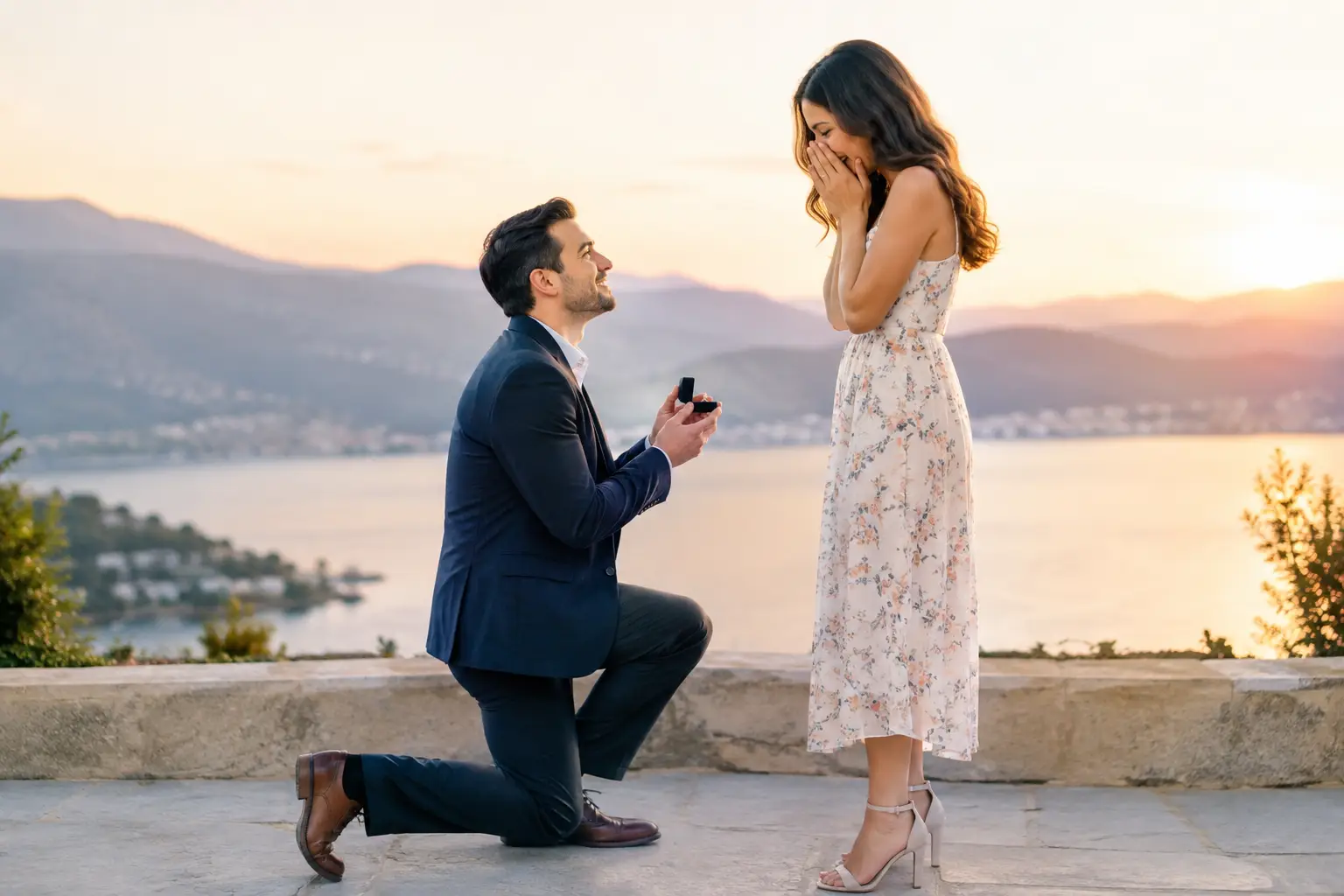
A proposal lasts a few breathtaking seconds, but the photographs preserve the look of recognition, the happy disbelief, and the embrace that follows. So, when should proposal photos be scheduled? The best answer is not simply “at sunset.” It is the moment when beautiful light, a workable location, your partner’s expectations, and a discreet photography plan all come together.
For most couples, planning begins several weeks before the proposal, while the actual proposal is scheduled around the strongest available light and the rhythm of the location. In Washington, DC, Northern Virginia, and Maryland, that often means accounting for crowded landmarks, seasonal daylight changes, security restrictions, and a thoughtful reason for your partner to be dressed and ready for a memorable evening.
When Should Proposal Photos Be Scheduled for the Best Result?
If you are asking about the time of day, schedule the proposal roughly 60 to 90 minutes before sunset whenever possible. This window gives your photographer enough daylight to document the arrival and proposal naturally, then continue with portraits in the softer light that follows. It also gives you room for a few joyful, unhurried photographs after the question has been asked.
Golden hour is flattering for a reason. The light is lower, warmer, and more dimensional than midday sun. It creates a sense of atmosphere without requiring a heavily posed approach. For a photojournalistic proposal story, that light also helps preserve the intimacy of the moment, whether you are on the Lincoln Memorial steps, along the Georgetown waterfront, at a private estate, or in a quiet garden.
Sunset is a guideline, not a rule. A sunrise proposal can be extraordinary for couples who value privacy and calm, especially at popular DC locations. Morning light is often clean and gentle, and parks or memorial areas are noticeably less crowded. The trade-off is practical: your partner must be genuinely comfortable with an early start, and the plan must feel believable rather than suspicious.
Avoid the harsh middle of the day when you can
A noon proposal can still be meaningful, particularly if it is tied to a private lunch, a museum visit, or a family celebration. Yet direct overhead sun often creates deep shadows and squinting, while public places tend to be busiest. If midday is the only option, choose open shade, a covered terrace, an interior with beautiful window light, or a location where the architecture offers a clean, elegant backdrop.
The goal is never to turn a proposal into a lighting exercise. The goal is to make the timing support the experience so you can be fully present when it matters most.
Book the Photographer Before You Finalize the Plan
If the question is when to arrange proposal photography, allow at least four to eight weeks of lead time. This is particularly wise for spring and fall weekends, holiday periods, and dates around major Washington events. A premium photographer can help you assess light, crowd patterns, access, and the best place to stand before you commit to a location.
More planning time also makes discretion easier. Your photographer may need to arrive early, select a natural-looking position, and identify the angle that keeps other visitors from dominating the frame. At a busy public landmark, the most beautiful view is not always the most practical place to propose. Experience matters because a photographer can anticipate where foot traffic will build and how the light will move across the setting.
For a destination proposal or a complex plan involving a restaurant, hotel, boat, private venue, or family members waiting nearby, eight to twelve weeks is even better. Some locations require permission or have policies for professional photography. A carefully coordinated plan prevents an avoidable interruption just as you are about to get down on one knee.
Choose a Time That Feels Natural to Your Partner
The most successful proposal plans have one thing in common: the timing makes sense to the person being proposed to. A beautiful 6:30 p.m. sunset is less useful if your partner has no reason to be at the location, is dressed for a workout, or is worried about being late for another commitment.
Build the proposal around something that already feels like the two of you. That might be a dinner reservation, a birthday weekend, a walk through a favorite neighborhood, a visit from family, or an anniversary outing. If you want them to dress up, give them a believable occasion that does not feel overly choreographed.
Consider their comfort with attention, too. Some people love the energy of a lively setting and the spontaneous cheers of strangers. Others will feel most themselves in a quieter space with few onlookers. There is no universally perfect proposal location. There is only the setting that lets your partner respond honestly.
Build in Time After the Proposal
Do not schedule the proposal at the exact moment you need to leave for dinner or meet family. The immediate aftermath is often the most expressive part of the story. There may be tears, laughter, repeated looks at the ring, calls to loved ones, and the first realization that you are engaged.
Set aside at least 20 to 30 minutes after the proposal for relaxed portraits. These are not stiff, formal images. They are a chance to capture the two of you as you come down from the excitement, with enough time to move to a nearby spot if the original setting is busy or backlit.
If you are planning a surprise celebration afterward, tell the photographer in advance. The transition can be documented beautifully, whether family members emerge from a nearby spot, friends are waiting at a restaurant, or the evening continues with champagne at home. The photographer can also help you decide whether to keep the initial proposal private and photograph the celebration separately.
DC Timing Requires a Little Local Awareness
Washington offers iconic settings, but it also operates on its own schedule. Cherry blossom season, Fourth of July week, marathon days, festivals, protests, motorcades, and large conventions can dramatically change access and crowd levels. A proposal near the monuments may be perfectly peaceful on one weekday and nearly impossible to photograph naturally on another.
Seasonal daylight is equally important. In summer, sunset can arrive late enough to affect dinner plans. In late fall and winter, it may be dark before many people leave work. Your photographer should confirm the exact sunset time for your date and create an arrival plan that accounts for parking, walking distance, and the possibility of delays.
Weather deserves a backup plan, not anxiety. Light rain can create remarkably romantic photographs, especially in a city of reflective stone, gardens, and historic architecture. Heavy rain, strong wind, or extreme heat may call for a covered alternative or a shift in timing. A thoughtful Plan B protects the experience without making it feel less spontaneous.
Keep the Photographer’s Role Quiet and Clear
A surprise proposal depends on a simple communication plan. Share a recent photo of you both, what each of you will be wearing if possible, the exact location, and a clear signal that tells the photographer the proposal is about to happen. That signal might be a text when you are five minutes away, a particular hand gesture, or walking to a designated spot.
Avoid trying to direct every second. The strongest proposal photographs come from real reactions, not from a perfect reenactment. Once the plan is in place, trust the photographer to work discreetly and respond to what unfolds. With more than three decades of experience documenting milestone celebrations, the Rodney Bailey team understands how to remain unobtrusive while being ready for the moment that cannot be repeated.
A Thoughtful Timeline Makes Room for Emotion
The right proposal schedule gives you enough structure to feel prepared and enough breathing room to be surprised by your own emotions. Choose a time with flattering light, a setting your partner will enjoy, and space afterward to let the moment sink in. Years from now, the details of the plan may blur, but the expression on your faces when your future changes will remain unmistakably clear.
Related Posts