7 First Look Alternatives for Your Wedding Day
A first look can be a beautiful choice, but it is not a requirement for a meaningful, well-photographed wedding day. The best first look alternatives protect what matters most to you: the anticipation, the people you love, and the freedom to experience your celebration without performing a moment simply because it is expected.
For some couples, seeing each other at the aisle is non-negotiable. For others, the privacy of a first look feels right, but the timing does not. The most successful plan is not the one that follows a trend. It is the one that gives your wedding day room for genuine emotion and allows your photography to reflect it naturally.
First Look Alternatives That Feel Personal
1. Save the first sight for the ceremony
The traditional aisle reveal remains one of the most powerful choices a couple can make. You will have spent the morning preparing separately, surrounded by different people and emotions. Then, in front of the people who have gathered to support your marriage, you see one another for the first time.
This option often creates a deeply moving ceremony entrance, especially when couples value the sense of occasion and want that reaction to be shared with family and friends. It can also feel more aligned with a religious or cultural tradition.
The trade-off is logistical. If you do not see each other beforehand, most couple portraits and many family photographs will need to happen after the ceremony. That is entirely workable with a thoughtful schedule, but it requires protecting enough time between the ceremony and reception. In Washington, DC, where venue access, city traffic, and seasonal daylight can all affect a timeline, that planning matters.
2. Exchange letters without seeing each other
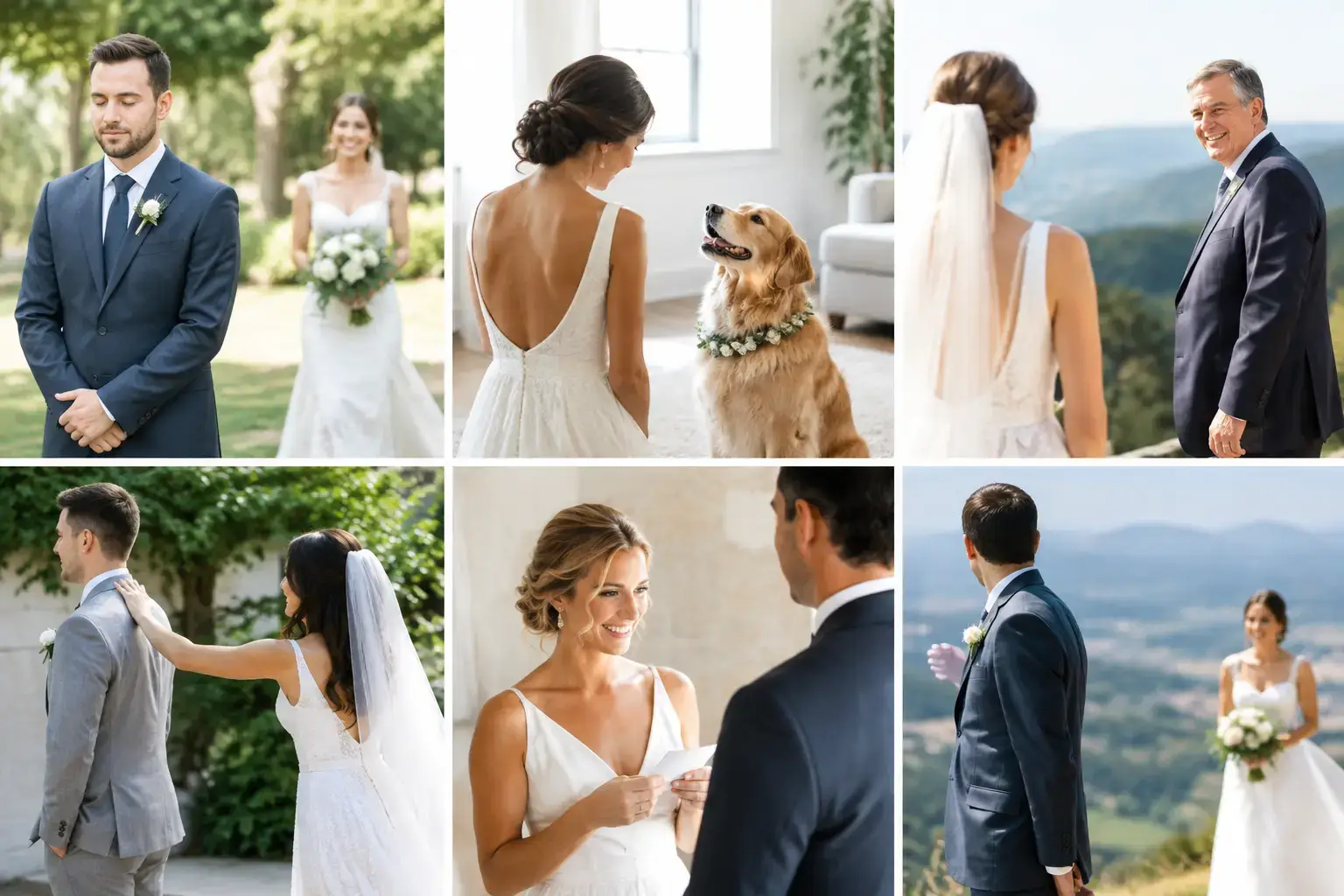
A letter exchange offers private emotional space while preserving the ceremony reveal. You might read letters in separate rooms, on opposite sides of a doorway, or at different quiet locations within your venue.
This is especially meaningful for couples who are not naturally comfortable expressing every feeling aloud in front of a crowd. A handwritten note slows the morning down. It gives you each a record of what you were feeling before the ceremony, long after the flowers have faded and the dance floor has emptied.
From a photographic perspective, these moments are often wonderfully unguarded. There is no need to manufacture a reaction. The focus is simply on your words, your anticipation, and the people who may be nearby offering a hand or a happy tear.
3. Share a first touch around a corner or door
A first touch is one of the most popular alternatives for couples who want connection without giving away the visual reveal. You stand on opposite sides of a doorway, a wall, or a carefully chosen architectural feature, hold hands, and speak privately before the ceremony.
You can use this time to pray together, exchange vows, read letters, or take a few quiet breaths. It is intimate without feeling staged, and it is particularly helpful when a busy wedding morning has left little room for the two of you to be alone.
The setting is important. A photographer will look for a location that is private enough for you to relax, visually clean, and practical for the schedule. A beautiful doorway at a historic DC hotel, a garden path in Virginia, or a quiet corridor at an estate can create the right sense of separation while keeping you close.
4. Have a first look with a parent or grandparent
A wedding day often brings family history to the surface. A first look with a father, mother, grandparent, sibling, or another cherished person can become one of the day’s most lasting images.
This is not a substitute for the moment with your partner. It is a separate opportunity to honor someone whose presence carries real meaning. Perhaps a father sees his daughter in her gown, a grandmother helps fasten a cuff link, or a mother shares a quiet word with her son before the ceremony. These are the moments that tend to become family heirlooms because they hold more than beauty. They hold relationship.
Keep the group small and the timing unhurried. When too many people gather for a planned reveal, the person at the center of it may feel pressure to react. A more private setting allows the connection to unfold naturally.
5. Share a reveal with your wedding party
If your wedding party has been part of the planning, traveled a long way, or simply knows how much this day means to you, a wedding party reveal can bring welcome energy to the morning. It is often joyful, spontaneous, and full of the laughter that makes getting-ready photographs feel alive.
This works best when it reflects your actual relationships. There is no need to stage matching robes, coordinated reactions, or an elaborate production if that is not your group’s style. Invite them in when you are ready, let the room respond as it will, and then move on with the day.
A wedding party reveal is also useful for couples who want pre-ceremony portraits without seeing each other. One partner can complete individual and wedding-party photographs while the other is finishing preparations, making better use of the morning.
6. Do separate pre-ceremony portraits
Choosing not to have a first look does not mean giving up on relaxed portraits before the ceremony. Each partner can have individual portraits, candid getting-ready coverage, and separate wedding-party photographs in advance.
This approach is ideal for couples who want to preserve the aisle reveal but do not want every photograph pushed into cocktail hour. It is also a sensible strategy when daylight is limited, as it can be during late-fall and winter weddings in the DC area.
The key is realistic timing. Hair and makeup frequently run later than expected, so the portrait plan should include breathing room rather than asking everyone to move at an impossible pace. A seasoned photography team will help identify what can be accomplished before the ceremony and what should be reserved for afterward.
7. Plan a private moment after the ceremony
Some couples prefer to let the ceremony be their first look, then step away together immediately afterward for a few minutes before family photographs or cocktail hour. It is a simple choice with a significant emotional benefit.
You have just made promises in front of the people closest to you. Before the celebration accelerates, a brief private walk, a quiet toast, or five minutes in a side garden gives you space to absorb it. These minutes can produce beautifully honest photographs because the ceremony is still fresh and you are no longer waiting for the day to begin.
If portraits are scheduled after the ceremony, this private pause can blend naturally into that time. You do not need a lengthy session. Even a short stretch without instructions or interruptions can reset the pace of the day.
How to Choose Between a First Look and Alternatives
The right decision usually comes down to three questions: What moment do you most want to protect? How much portrait time do you want before the reception? And what will make you feel most like yourselves?
Choose the aisle reveal if shared anticipation, tradition, or a ceremonial first sight feels emotionally essential. Choose a first look if private time together will calm your nerves, if you want a longer portrait window before guests arrive, or if your reception timeline is especially tight. Consider a first touch or letter exchange if you want emotional connection without changing the ceremony reveal.
There is also no need to treat this as an all-or-nothing decision. Many couples skip a first look, exchange letters, complete separate portraits, and take a private moment after the ceremony. Others have a first look but still create a meaningful parent reveal or wedding-party moment. Your day can hold more than one kind of anticipation.
Build the Photography Timeline Around Your Priorities
Photography should support the experience, not dictate it. If you are forgoing a first look, consider allowing a generous cocktail hour or arranging a first look with your wedding party and family members earlier in the day. If sunset portraits matter to you, protect a short window later in the evening rather than hoping the schedule will magically open up.
At Rodney Bailey, more than three decades of wedding coverage has shown that the strongest images come from a plan with purpose and enough flexibility for real life. A late limousine, an emotional parent, a sudden rain shower, or a room full of guests eager to celebrate should not derail the story of your day.
The best choice is the one you will remember with relief and happiness, not the one you felt obligated to make. Give yourselves permission to preserve the anticipation, privacy, and family connection that matter most. When the day reflects your relationship, the photographs will, too.
Related Posts