The Best Moments to Photograph at Weddings
A wedding day moves quickly, but its most lasting images often happen in the pauses: a parent fastening a cufflink, a bride taking one quiet breath before the doors open, or a grandparent watching the dance floor fill. Knowing the best moments to photograph weddings well is less about checking off a shot list and more about recognizing where emotion is about to surface.
For couples planning a wedding in Washington, DC, Northern Virginia, or Maryland, the goal is not to spend the day performing for the camera. It is to have photographs that bring you back to how the day felt: joyful, elegant, occasionally hilarious, and entirely your own. A seasoned photojournalistic team anticipates those moments while giving your celebration room to unfold naturally.
The best moments to photograph at weddings begin before the ceremony
The getting-ready hours offer some of the most personal storytelling of the day. These photographs establish the setting, the style, and the people who helped make the celebration possible. A carefully chosen invitation suite, heirloom jewelry, shoes waiting near a window, and flowers fresh from the designer all help preserve the visual details you invested time in choosing.
The real value, however, is in the interactions around those details. A best friend seeing the wedding attire for the first time, a parent adjusting a veil, or a groom reading a handwritten note can hold more meaning than any perfectly arranged flat lay. These are private moments, and they require a photographer who knows when to offer gentle direction and when to step back.
The first look, if it feels right for you
A first look can create a calm, meaningful pocket of time before the ceremony. It gives couples a chance to see one another without an audience, speak freely, and settle into the day together. It can also make room for portraits before guests arrive, which may allow more time at cocktail hour.
Still, a first look is not a requirement. Some couples prefer the anticipation of seeing each other for the first time during the ceremony, and that choice can produce a powerful reaction. The best decision is the one that reflects your priorities, not a formula. A thoughtful photography timeline should support either approach.
The ceremony is built on reactions
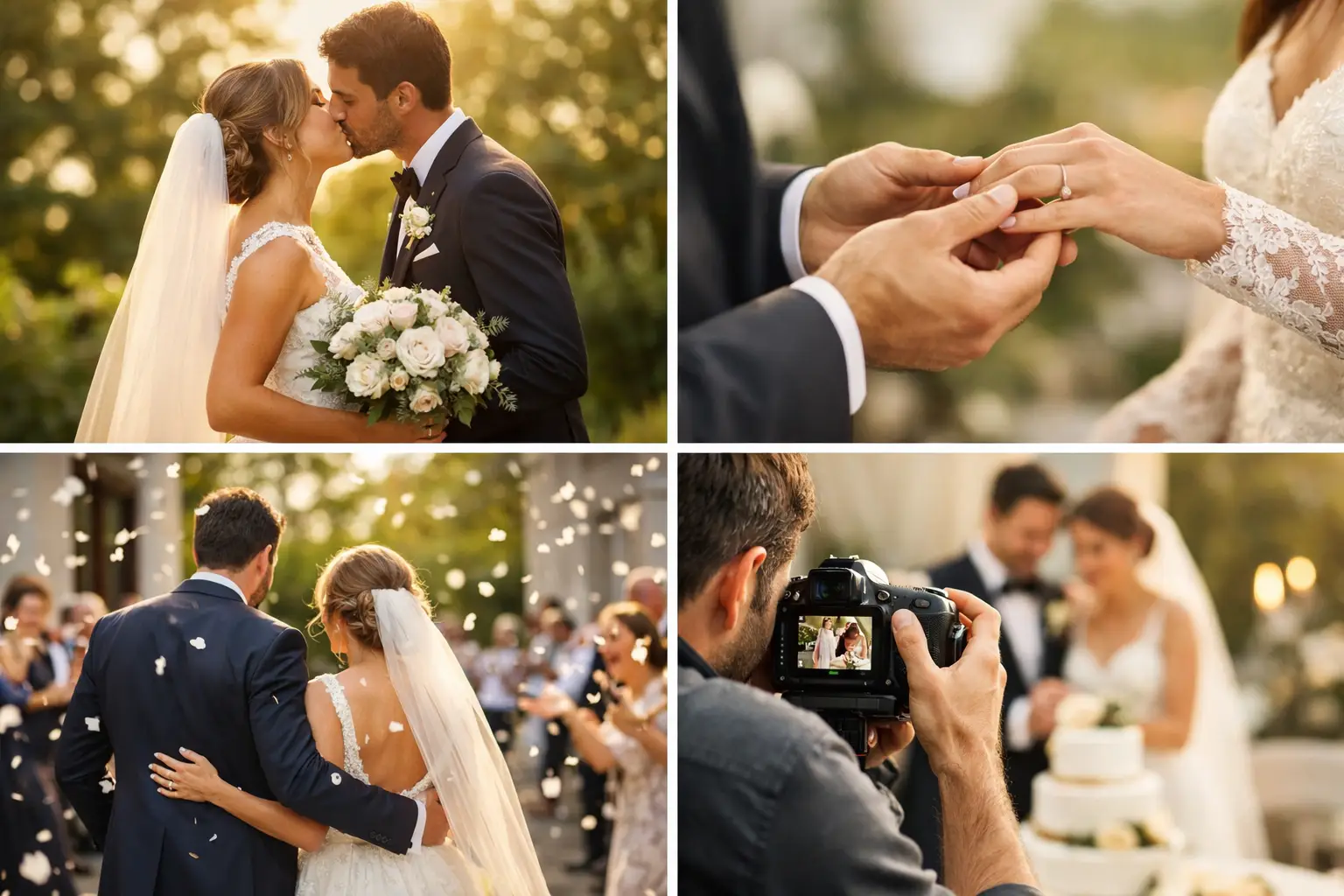
The processional is about far more than the walk down the aisle. Watch the expressions: the partner waiting at the altar, the parent who suddenly becomes emotional, the wedding party trying not to cry, and guests leaning in for a better view. These reactions tell the fuller story of the commitment taking place.
During the vows, close attention matters. Hands reaching for one another, a quiet laugh after a mispronounced word, tears held back and then released, and the look exchanged just before the kiss are fleeting. They cannot be recreated with the same truth later. Discreet coverage is essential here, particularly at venues where photographers must work within specific ceremony guidelines.
The recessional is another often underestimated moment. Once the ceremony is complete, couples frequently show a joyful release that is completely different from the emotion of the processional. The walk back up the aisle, followed by hugs from immediate family and congratulations from the wedding party, carries an energy worth preserving.
Portrait time should feel like part of the celebration
Wedding portraits are the images most likely to be framed, shared, and passed down. They deserve intention, but they should not consume the day. The strongest portraits balance flattering light, thoughtful composition, and genuine connection between the two people being photographed.
In the DC region, that may mean making the most of a historic hotel staircase, the architecture of a museum, a garden at a private estate, or the evening glow outside a city venue. A skilled photographer considers the backdrop, weather, guest schedule, and available light, then keeps direction simple and natural. You do not need to know how to pose. A small adjustment in where you stand, where you look, or how you hold one another is often enough.
Family portraits also matter, especially when generations have gathered from across the country. A well-organized list keeps this portion efficient, but the in-between moments can be just as memorable: siblings laughing while waiting, a child reaching for a grandparent, or a parent taking in the sight of the newly married couple. Build a few extra minutes into the schedule so these photographs do not feel rushed.
Cocktail hour reveals the wedding from your guests’ perspective
While couples are often away for some portion of cocktail hour, this is when guests begin to relax into the celebration. It is an ideal time to document the atmosphere you created: signature drinks being served, musicians performing, meaningful embraces, and friends reconnecting after years apart.
These images add dimension to the final gallery. They show that the wedding was not simply a beautiful event, but a gathering of the people who know and love you. For couples who want extensive guest coverage, it helps to tell the photography team in advance which relatives, mentors, or longtime friends should receive special attention.
Reception photographs are about momentum, not just traditions
The reception has its own rhythm. Grand entrances, first dances, toasts, parent dances, cake cutting, and cultural traditions are natural milestones, but the most compelling reception photographs often happen immediately beside them. A speaker pausing to collect themselves before a toast. A couple listening to a story told by a sibling. A group of friends erupting in laughter at the same table.
The first dance is especially rich with possibility. Rather than focusing only on a single wide image, thoughtful coverage looks for changing expressions, clasped hands, family members watching from the edge of the floor, and the way the room responds. If the lighting changes from warm daylight to a dramatic evening atmosphere, that shift can add visual texture to the story.
Once the dance floor opens, the best photographs come from participation rather than perfection. Children dancing with abandon, grandparents joining a favorite song, friends lifting their hands during a chorus, and a couple slipping into the crowd all speak to the feeling of the night. A photographer should be present enough to catch the action without turning the party into a production.
Do not miss the quiet moments near the end
As the night winds down, the pace often softens. Couples may share a private word at their sweetheart table, take a breath together outside the reception room, or look back at a dance floor full of the people who came to celebrate them. These quieter frames can become unexpected favorites because they show the weight and happiness of the day settling in.
A planned exit can be visually memorable, whether it involves streamers, glow wands, vintage transportation, or simply a crowd of guests gathered at the door. But it is only worthwhile if it fits the event and your timeline. An intimate last dance, photographed with the room nearly empty, may feel more authentic for some couples than a formal exit.
At Rodney Bailey, more than three decades of wedding storytelling has reinforced one simple truth: the images couples treasure most are rarely the ones they had to manufacture. Give your photography team a clear sense of your priorities, protect a little breathing room in the timeline, and stay present with the people you invited. The meaningful moments will arrive, often when you are busy living them.
Related Posts