The Torah reading stands as the emotional and spiritual centerpiece of any Bar or Bat Mitzvah, particularly for Bar and Bat Mitzvah photography. It’s the moment the child steps into adulthood, chanting ancient words with months (or years) of preparation shining through. For photographers, this is sacred ground—technically challenging, emotionally rich, and bound by tradition and synagogue rules.
The Significance and Challenges
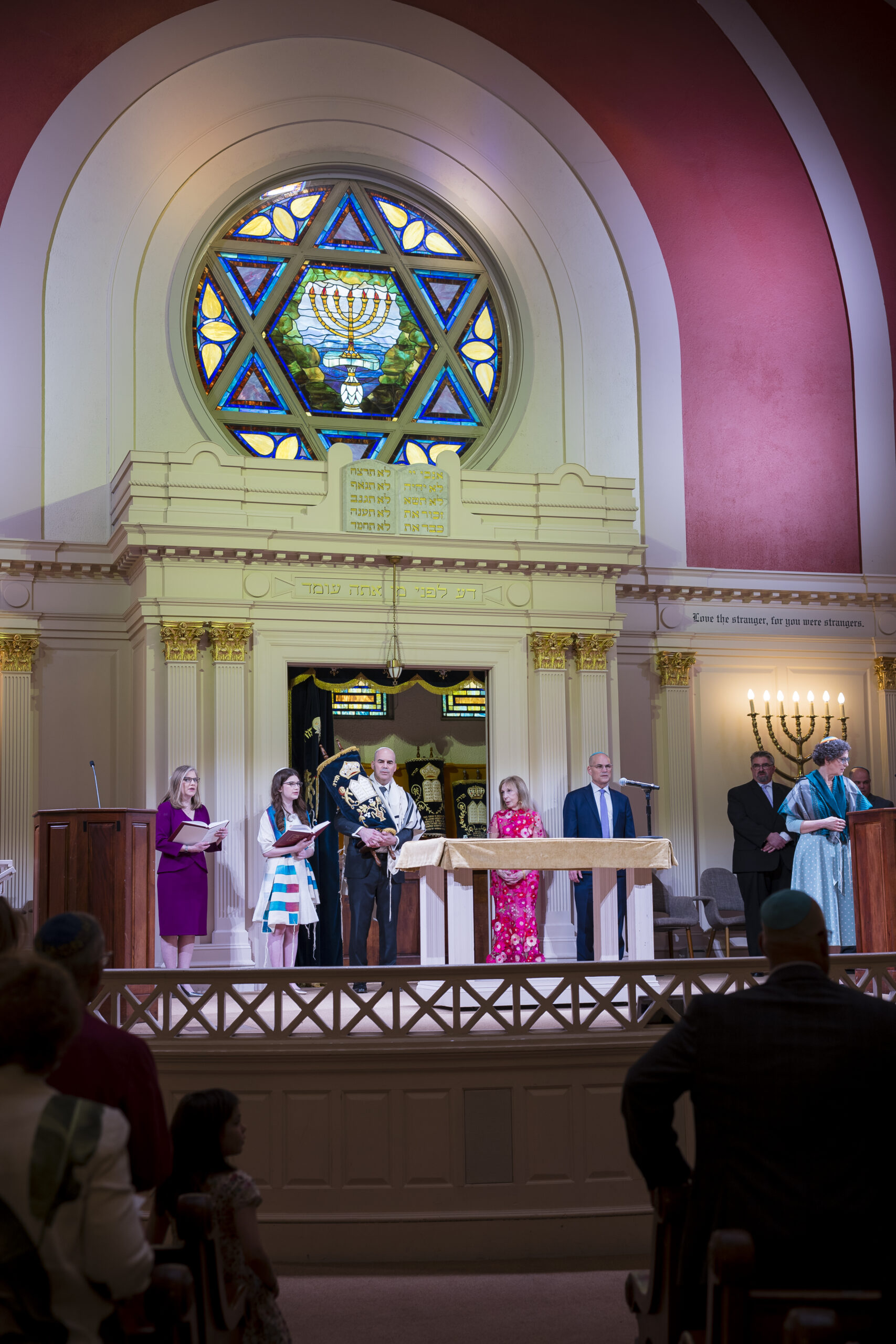
This portion of the service symbolizes continuity, learning, and personal achievement. Families treasure images of their child at the bimah: focused expression, finger following the text with a yad (pointer), the open scroll, proud parents watching, and the congregation’s quiet reverence.
Key challenges:
- Low light — Many sanctuaries rely on ambient or soft lighting to maintain a reverent atmosphere. Flash is almost always prohibited.
- Restrictions — Synagogues vary widely. Some ban photography during the service entirely; others restrict photographers to balconies, side aisles, or no movement near the bimah. A few allow discreet shooting.
- Etiquette — Silence, minimal movement, and respect for the sacred space are non-negotiable.
- Timing — The reading happens quickly, with specific aliyot (portions) and blessings.
Pre-Planning is Essential
Contact the synagogue (or have your photographer do so) well in advance with these questions:
- Is photography allowed during the Torah service?
- What are the exact restrictions (location, flash, movement)?
- Can we schedule pre- or post-service photos with the actual Torah scroll?
- Is there a rehearsal where practice readings can be photographed?
Many photographers capture rehearsal Torah processions, practice readings, or staged shots with the scroll (handled only by clergy if required) as beautiful alternatives or supplements.
Gear and Technical Tips for Low-Light Success
- Lenses: Fast primes (50mm f/1.2–1.8, 85mm f/1.4, or 70-200mm f/2.8) for reach and light gathering. A telephoto helps from a balcony or distance.
- Camera settings: High ISO (1600–6400+), wide apertures, shutter speeds around 1/125s or slower with image stabilization. Use silent/quiet shutter mode.
- Technique:
- Expose for the face or Torah; shadows are often acceptable for mood.
- Burst mode for fleeting expressions (nervous smile turning to pride).
- Bracket exposures if needed for post-processing.
- Positioning: Scout the venue early. Balcony overhead shots offer clean, unobtrusive angles. Side or rear positions work for profiles and reactions.
Pro move: Arrive early to test lighting and focus in the space.
Must-Capture Moments During Torah Reading
- Anticipation — Child approaching the bimah, adjusting tallit or yarmulke.
- The Reading — Close-ups of the child chanting, hand/pointer on the scroll, intense concentration.
- Family Reactions — Parents, grandparents, siblings beaming with pride or wiping tears.
- Blessings — Pre- and post-aliyah blessings with parents or rabbi.
- Aftermath — Relief, hugs, applause, or the child stepping down triumphantly.
- Details — The open Torah scroll, yad, embroidered coverings, or generational hands touching the scroll during procession.
Documentary-style candids often resonate most—raw emotion over stiff poses.
Creative and Respectful Approaches
- Pre/Post-Service Portraits: Child holding/reading from the Torah in natural light or with dramatic sanctuary backdrops.
- Multi-Generational Stories: Include grandparents or family members who passed down the tradition.
- Black & White: Timeless feel that emphasizes emotion and reduces distraction from low-light color noise.
- Storytelling Sequence: A series showing preparation → moment → celebration tells the full arc.
For photographers new to this: Shadow a seasoned Mitzvah shooter, attend services (with permission), and study Jewish customs deeply. Understanding the flow prevents missing key beats.
Why These Photos Matter Most
Years later, families return to Torah reading images as proof of growth and continuity. They appear in albums, walls, and future simchas (celebrations). A well-captured reading photo isn’t just technical—it’s a visual legacy of faith, family, and achievement.
If you’re planning a Mitzvah in the Virginia/DC/Maryland area, Event Photo Journal specializes in respectful, beautiful Torah reading coverage, particularly for Washington DC event photography. We work closely with synagogues to honor rules while delivering powerful images.
What’s your biggest hope or worry for photographing (or being photographed during) the Torah reading? Share below—I’d love to hear and offer tailored advice!
This deep dive can stand alone as a blog post or slot perfectly into your broader Mitzvah photography guide. Let me know if you’d like variations, sample shot lists, or visuals to accompany it.