
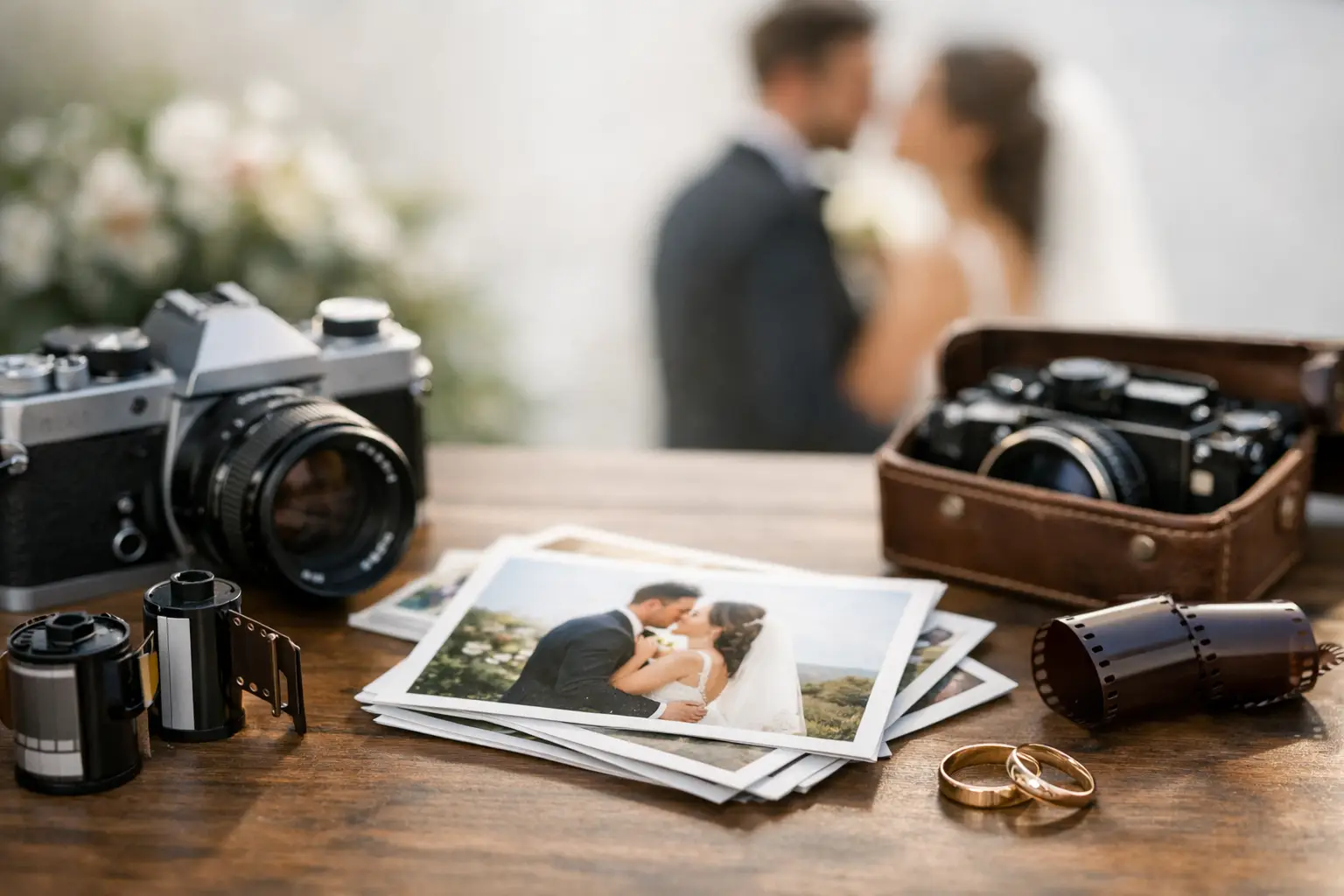
Film Wedding Photography: Is It Right for You?
A wedding day moves quickly: a parent seeing their child dressed for the first time, hands reaching across a dinner table, the quiet exhale just before the ceremony begins. Film wedding photography gives these moments a distinctive presence – luminous, tactile, and gently romantic without feeling manufactured. For couples drawn to imagery with depth, softness, and a sense of permanence, it can be a beautiful fit.
Film is not simply a visual trend or a preset applied after the fact. It is a photographic medium with its own process, limitations, and rewards. Understanding those differences helps couples choose a photographer and coverage approach that supports the way they want their celebration remembered.
What Makes Film Wedding Photography Distinct
Film responds to light differently than digital sensors. It is especially known for graceful highlights, nuanced skin tones, rich color, and natural grain. In a sunlit garden, a historic ballroom, or a softly lit getting-ready suite, film can create an image that feels polished while preserving the texture of the real scene.
The appeal is often difficult to reduce to one quality. A film photograph may hold detail in a bright bridal gown while allowing the surrounding light to feel warm and open. It may render greens, florals, and candlelight with a gentle cohesion rather than intense saturation. The result is often timeless, but not because it imitates the past. It feels timeless because it gives emotion and light room to breathe.
That character is particularly compelling for Washington, DC weddings. The region offers extraordinary settings, from formal institutions and historic estates to waterfront venues and private gardens. Film can complement architectural detail and elegant design without making the people in the photographs feel secondary to the setting.
Film Is a Process, Not a Filter
A polished film-inspired look can be created digitally, and excellent digital photography remains the foundation of many complete wedding collections, particularly for Washington DC wedding photography. True film wedding photography, however, involves physical rolls of film that are carefully metered, exposed, developed, and scanned.
This process calls for intention. A photographer must read changing light, select the right film stock, and make deliberate exposure decisions before pressing the shutter. There is no immediate review screen to confirm every frame. That discipline can encourage thoughtful composition and a quieter, more observant approach to documenting the day.
For couples, this does not mean their wedding should feel slow or overly directed. The best photojournalistic work still depends on anticipation: noticing a glance, recognizing a gesture before it happens, and being close enough to tell the story without interrupting it. Film is most meaningful when it supports authentic coverage rather than turning the wedding into a production.
Where Film Shines on a Wedding Day
Film is especially lovely when light is abundant or carefully shaped. Outdoor portraits near sunset, ceremony processions, editorial details, and quiet portraits after the ceremony are natural opportunities for its signature quality. It also brings a refined softness to black-and-white images, where expression, gesture, and atmosphere take center stage.
That said, a wedding day does not happen under one consistent lighting condition. A DC celebration may move from a bright afternoon ceremony to a dark reception with candlelight, colored uplighting, and fast-moving dancing. This is where a hybrid approach can offer the strongest result.
The value of hybrid coverage
Hybrid coverage combines film with digital photography. The photographer may use film for portraits, details, and select ceremony moments, then rely on digital cameras for rapidly changing reception light, family formals, and situations where volume and speed are essential. It is not a compromise in quality. It is a considered way to use each medium where it performs best.
For many couples, the ideal gallery includes the dimensional beauty of film alongside the consistency and flexibility of digital imagery. The finished collection should feel cohesive, not divided into two separate visual experiences. That comes from a photographer who understands both technical systems and edits with a clear, consistent point of view.
The Trade-Offs Worth Understanding
Film has practical considerations, and a professional photographer should explain them clearly. Film rolls have a limited number of exposures. Development and scanning require time. Because each frame carries a material cost and cannot be reviewed instantly, film coverage is generally more selective than digital coverage.
It can also be less forgiving in extremely low light or venues where flash use is restricted. If your reception vision includes a dark dance floor and dramatic ambient lighting, digital photography may be the more reliable primary tool for preserving every high-energy moment. A skilled photographer can still incorporate film strategically, but expectations should be aligned before the wedding day.
Weather matters, too. Overcast skies can be beautiful on film, often producing flattering and even skin tones. Harsh midday sun can also be managed well with experience and careful positioning. Yet no format eliminates the need for thoughtful timing, a strong rain plan, and an understanding of your venue’s light.
How to Choose a Photographer for Film Coverage
Begin with the work, not the label. Ask to see complete wedding galleries that include a range of lighting conditions, venues, skin tones, and emotional moments. A few beautiful portraits are encouraging, but a full gallery reveals whether the photographer can tell a complete story from preparation through the final dance.
Look for imagery that feels natural in addition to beautiful. Are people relaxed? Do family photographs feel organized without becoming stiff? Is there a balance between editorial portraiture and unscripted moments?
A Washington DC wedding photographer should know how to create a refined portrait efficiently, then step back when the real story is unfolding.
It is also reasonable to ask how film will be used. Will it be the primary medium or part of hybrid coverage? How many rolls are included? Who handles development and scanning? What is the anticipated delivery timeline? The answers should be direct, specific, and suited to the rhythm of your celebration.
Experience matters because wedding photography is as much about judgment as it is about equipment. A photographer who has worked across formal ceremonies, intimate gatherings, complex timelines, and high-profile Washington events understands when to lead, when to anticipate, and when to disappear into the background. At Rodney Bailey, more than three decades of photojournalistic wedding experience informs that balance of artistry, discretion, and client care.
Planning a Wedding That Photographs Beautifully on Film
You do not need to redesign your wedding around photography. A few practical choices can make a meaningful difference. If portraits are important, reserve a small amount of time when the light is soft, often later in the afternoon. Consider getting-ready spaces with window light and enough room for people to move naturally. For the reception, candles and warm practical lighting often photograph more elegantly than colored uplighting alone.
The most important choice is to protect time for what matters to you. If seeing one another before the ceremony would make the day calmer and allow for unhurried portraits, a first look may be valuable. If you would rather preserve the ceremony reveal, a well-built post-ceremony portrait plan can work just as well. There is no single correct timeline, only one that reflects your priorities.
A Lasting Look for a Once-in-a-Lifetime Day
Film can lend a wedding gallery a sense of warmth and visual restraint that remains compelling long after trends change. But the medium is only part of the equation. The photographs you return to will be the ones that hold your people, your atmosphere, and the moments you were too busy living to fully see.
Choose the approach that lets you be present at your wedding while trusting that its beauty, joy, and honest emotion are being preserved with care.
Related Posts