Museum Gala Photography That Honors the Night
A museum gala has a rare visual advantage: the setting already carries history, texture, and meaning. A grand staircase, a celebrated collection, or an illuminated atrium can make an arrival feel significant before the first toast is poured. Museum gala photography must preserve that sense of occasion while documenting the true reason guests gathered – the people, the generosity, and the mission their support makes possible, particularly for Washington DC event photography.
That balance takes more than beautiful portraits in an impressive room. It calls for an experienced event photographer who can work discreetly around curators, donors, trustees, honorees, entertainers, catering teams, and museum guests, all while anticipating the fleeting moments that give an evening its emotional narrative.
What Makes Museum Gala Photography Different
Gala coverage is not simply a sequence of posed arrival photos followed by ballroom candids. At a museum, the environment is an active part of the story, but it must never overwhelm the organization or the people who sustain it. The most successful photographs show guests enjoying a distinctive cultural setting while making the evening feel welcoming, energetic, and deeply purposeful.
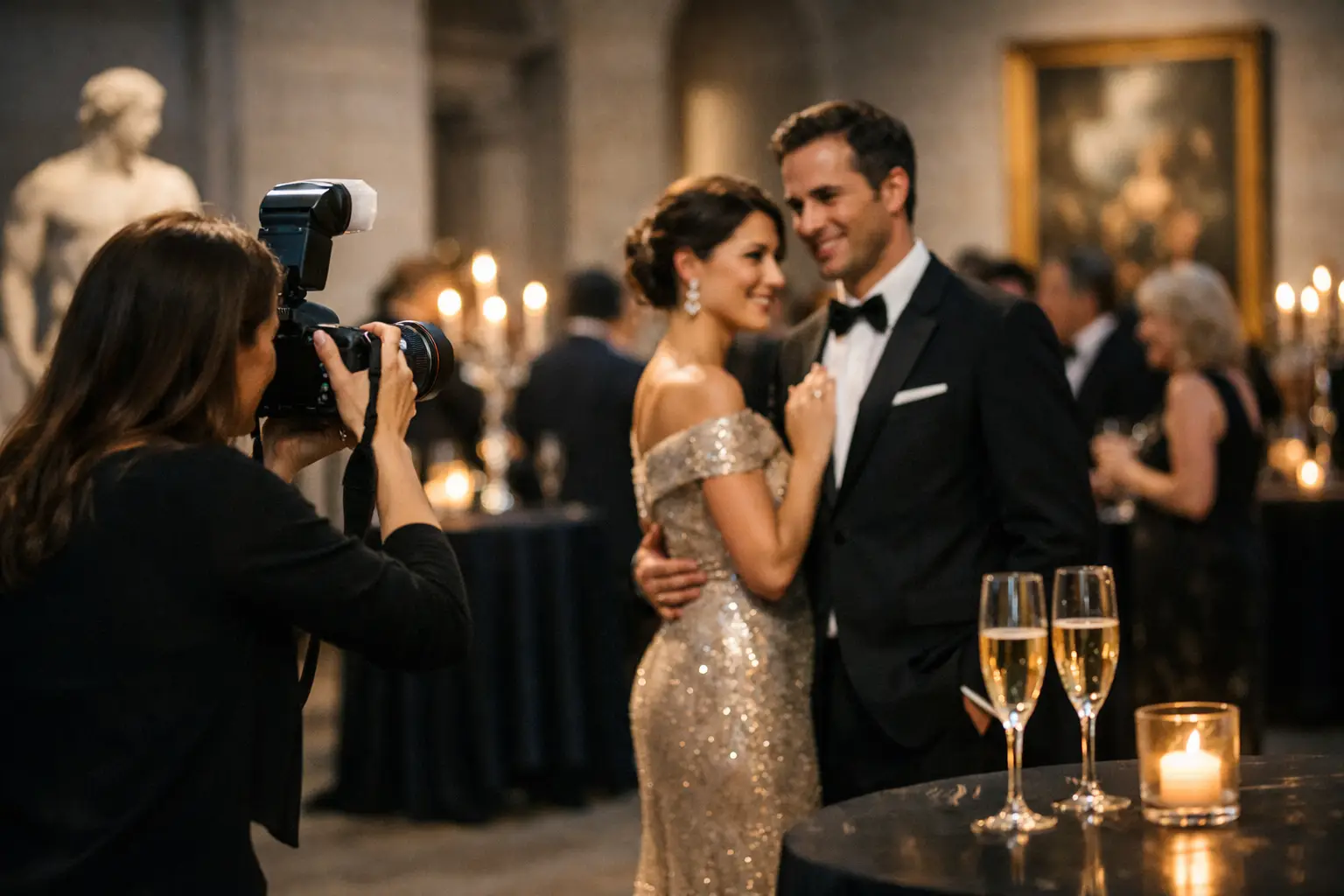
There are also practical constraints that shape the work. Museums may limit flash photography near artwork, restrict access to galleries, require photographers to stay within designated paths, or have closely managed loading and security procedures. Low light is often part of the design, with candlelight, colored uplighting, projections, and dramatic architectural shadows creating an elegant atmosphere that can be difficult to photograph well.
An experienced photographer arrives prepared for those conditions. The goal is not to flatten the room with intrusive lighting or interrupt a donor conversation to create a picture. It is to use available light thoughtfully, add light only when it supports the setting, and make polished images without making guests feel observed all evening.
The Images a Gala Team Actually Needs
A strong museum gala gallery should do more than prove that the event happened. It should help an organization recognize supporters, thank sponsors, share its success with its board, and build excitement for future fundraising. That requires a thoughtful mix of documentary images and intentional portraits.
The evening typically begins with arrivals. These photographs should feel elevated but efficient: well-composed images of guests, sponsors, hosts, and leadership in a setting that immediately communicates the museum’s character. A refined step-and-repeat can be useful for partner visibility, though it should not become the visual center of the night if the museum itself offers a more compelling backdrop.
Once guests enter, the visual storytelling broadens. Photographs of patrons greeting one another, studying a special exhibition, finding their tables, and taking in the room establish scale and atmosphere. These are followed by the moments that carry the mission forward: a moving introduction, an honoree’s reaction, a standing ovation, hands raised during a paddle raise, or the quiet exchange between a longtime supporter and a program beneficiary.
The best coverage also includes context. Details such as place settings, floral design, auction materials, branded installations, and menus deserve attention because they represent considerable planning and help communicate the quality of the event. Yet details should serve the larger narrative, not replace it. A room is most compelling when it is alive with people.
Donor Portraits Without the Stiffness
Many gala organizers need usable portraits of major donors, sponsors, committee members, and honorees. The challenge is creating them without turning the evening into a photo call.
A dedicated portrait area can be valuable, particularly for leadership groups and sponsors who need reliable, publishable images. It works best when it is attractive, close to the main event flow, and staffed by a photographer who can guide people quickly and graciously. A few minutes of calm direction can produce flattering images while keeping the experience natural.
Elsewhere, candid photographs should carry equal weight. A genuine laugh at a cocktail table, an embrace after an award presentation, or an animated conversation in front of a favorite work of art often says more about the event than a formal line of poses. The two approaches work together: polished portraits meet practical communications needs, while candid imagery makes the gallery feel human.
Planning for Better Museum Gala Coverage
The photography plan should begin before the event day. A short conversation with the photographer, venue contact, and event lead can prevent avoidable compromises later. The photographer should understand the organization’s priorities, the evening’s schedule, the people who must be photographed, and any museum-specific restrictions.
A useful timeline identifies the moments that cannot be repeated. If the museum director is greeting an honoree before doors open, that may be the only opportunity for a meaningful image of the two together. If a sponsor group needs a photograph before dinner, build in a clear window rather than hoping to gather everyone once the program begins. If a live auction or performance is central to fundraising, share the run of show so the photographer can position properly before the moment unfolds.
Lighting deserves an early conversation as well. Dramatic event lighting can be beautiful in person but may create heavy color casts or leave faces in deep shadow, particularly for event photography in Washington DC. That does not mean the design needs to be compromised. It means the photography team should understand the lighting plan and, when appropriate, coordinate with the production team on subtle adjustments that preserve the mood while protecting image quality.
For organizations working with a large guest count or multiple event spaces, a second photographer can be a meaningful investment. One photographer may focus on VIP arrivals, portraits, and the formal program while another documents cocktail hour, details, sponsor visibility, and candid interactions in adjacent galleries. It depends on the schedule, scale, and deliverable needs, but simultaneous coverage is often what makes a gallery feel complete rather than selective.
Why Discretion Matters in a Museum Setting
The finest gala photography is highly observant, not highly visible. Donors and guests should be free to connect, celebrate, and support the cause without feeling as though every conversation is being staged for the camera.
Discretion is especially important in galleries and during seated programs. A photographer needs to move with awareness, respect sightlines, avoid distracting guests, and understand when to capture a moment from a distance. During emotional remarks, the camera should be ready for the speaker, the honoree, and the audience response. Those reactions are often the photographs an organization returns to when telling the story of impact after the event.
More than 30 years of photographing celebrations and high-profile events has taught the Rodney Bailey team that trust is visible in the final images. People relax when they know the photographer is prepared, composed, and attentive without being disruptive. That comfort produces photographs with warmth and ease, even in a formal setting.
Choosing the Right Photographer for the Evening
When reviewing photographers for a museum gala, look beyond a collection of attractive room shots. Ask whether their work shows command of low light, real expressions, important speakers, audience response, and the quick transitions of a live program. An elegant empty ballroom is useful, but it cannot demonstrate the ability to capture a fundraiser at its emotional peak.
It is also wise to ask how the photographer approaches image delivery, sponsor requests, and must-have people. A clear process for identifying VIPs helps ensure key supporters are represented without making the entire night feel over-directed. The photographer should be able to adapt to a changing schedule while maintaining the calm, polished presence expected at a premium event.
Finally, choose someone whose style reflects the organization’s character. Some galas benefit from a fashion-forward, highly posed look. Others call for a more photojournalistic approach that centers authentic connection. Most museum events need both sophistication and sincerity: images with enough polish for an annual report, and enough feeling to remind every guest why the mission deserved their evening.
When the final guest has departed and the galleries have gone quiet, the photographs become part of the event’s continuing life. They thank the people who showed up, honor the work behind the fundraiser, and give next year’s supporters a reason to imagine themselves in the room.
Related Posts