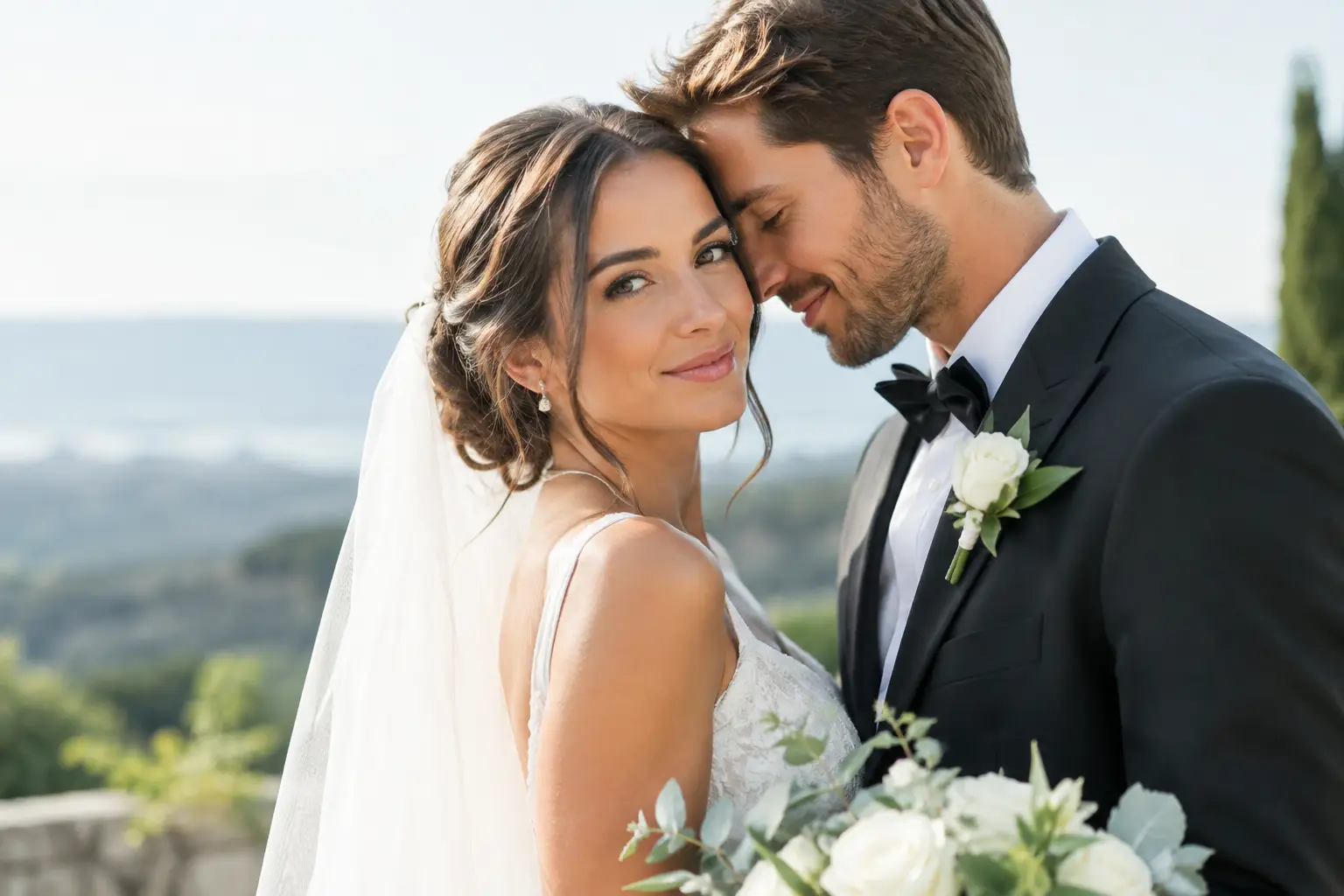
What to Expect From a Proposal Photographer
A proposal happens in seconds, but the photographs become part of your story for a lifetime. Knowing what to expect from a proposal photographer helps you plan the moment with confidence while protecting the surprise, the emotion, and the spontaneity that make it yours.
The best proposal photography is never about turning a deeply personal question into a production. It is about thoughtful preparation behind the scenes, followed by a photographer who knows when to stay out of the way. From a quiet garden proposal in Washington, DC, to a sweeping monument view in Northern Virginia or a waterfront setting in Maryland, the experience should feel polished, calm, and remarkably natural.
The Planning Happens Well Before the Proposal
A successful surprise proposal begins with a detailed conversation. Your photographer will want to understand the setting, your timing, your partner’s expectations for the day, and the overall feel you want for the images. This is not simply about choosing a pretty location. It is about anticipating how the moment will unfold there.
Be prepared to discuss where you plan to stand, which direction you will approach from, where your partner is likely to face, and whether anyone else will be involved. If friends or family are waiting nearby, your photographer can help determine where they should gather without being seen too soon. A small amount of planning can prevent a beautiful scene from becoming visually crowded or logistically difficult.
For locations around the DC area, experience matters. Popular spots may have heavy foot traffic, security restrictions, construction, uneven light, or limited parking. A seasoned photographer can recommend a practical meeting point, arrive early to assess the scene, and create a backup plan if weather or crowds change the original plan.
Share the Details That Seem Small
The details you share privately can make a meaningful difference. Let your photographer know what you will be wearing, whether you will carry the ring in a jacket pocket or bag, and how you plan to signal that the proposal is about to happen. A simple gesture, a text sent five minutes ahead, or a planned pause at a particular bench can be enough.
It is also helpful to describe your partner. Are they comfortable being photographed? Do they tend to notice a camera immediately? Are they likely to cry, laugh, freeze in surprise, or want a private moment after saying yes? These are not details to script. They help the photographer read the moment with sensitivity.
Expect Discretion, Not a Visible Photoshoot
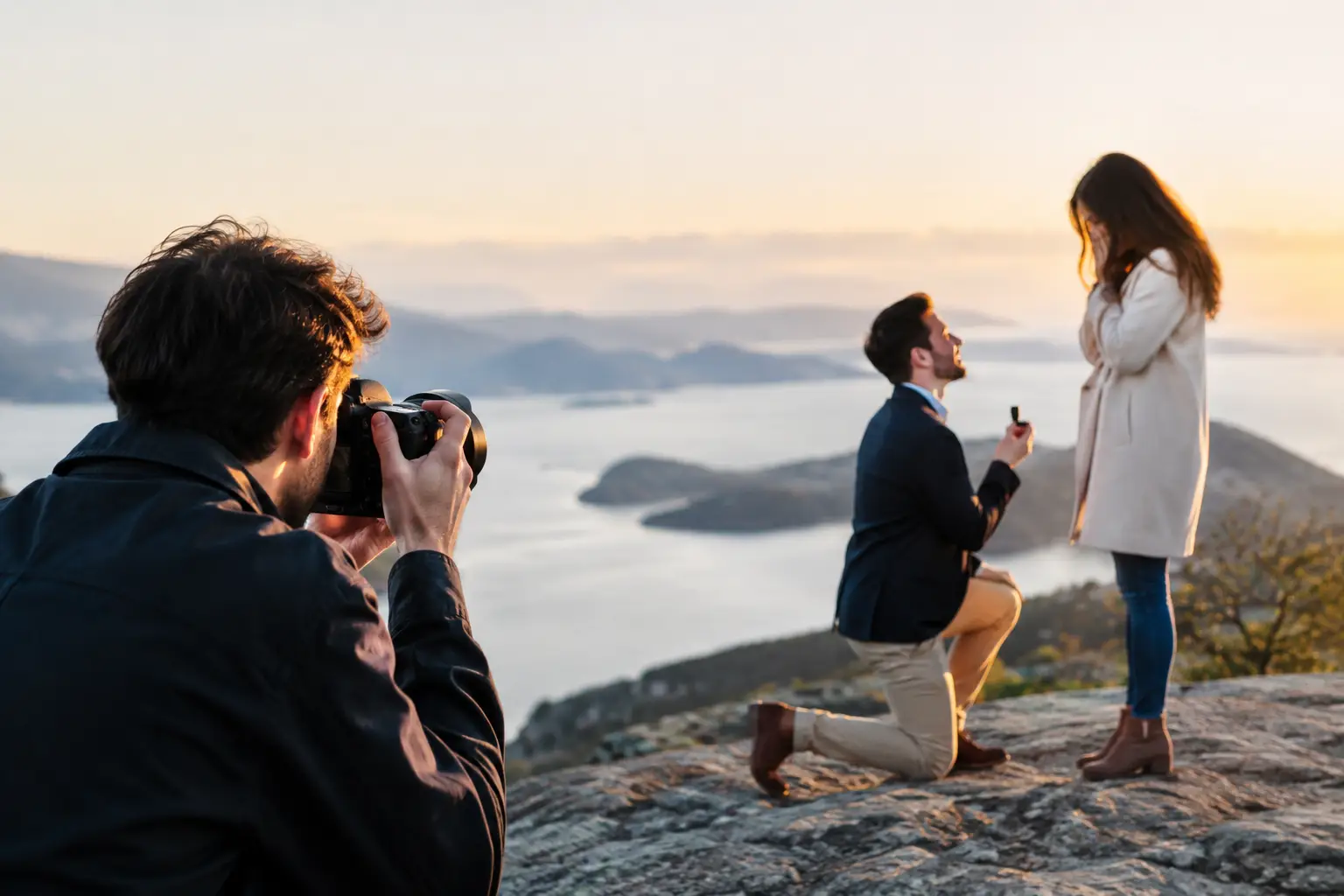
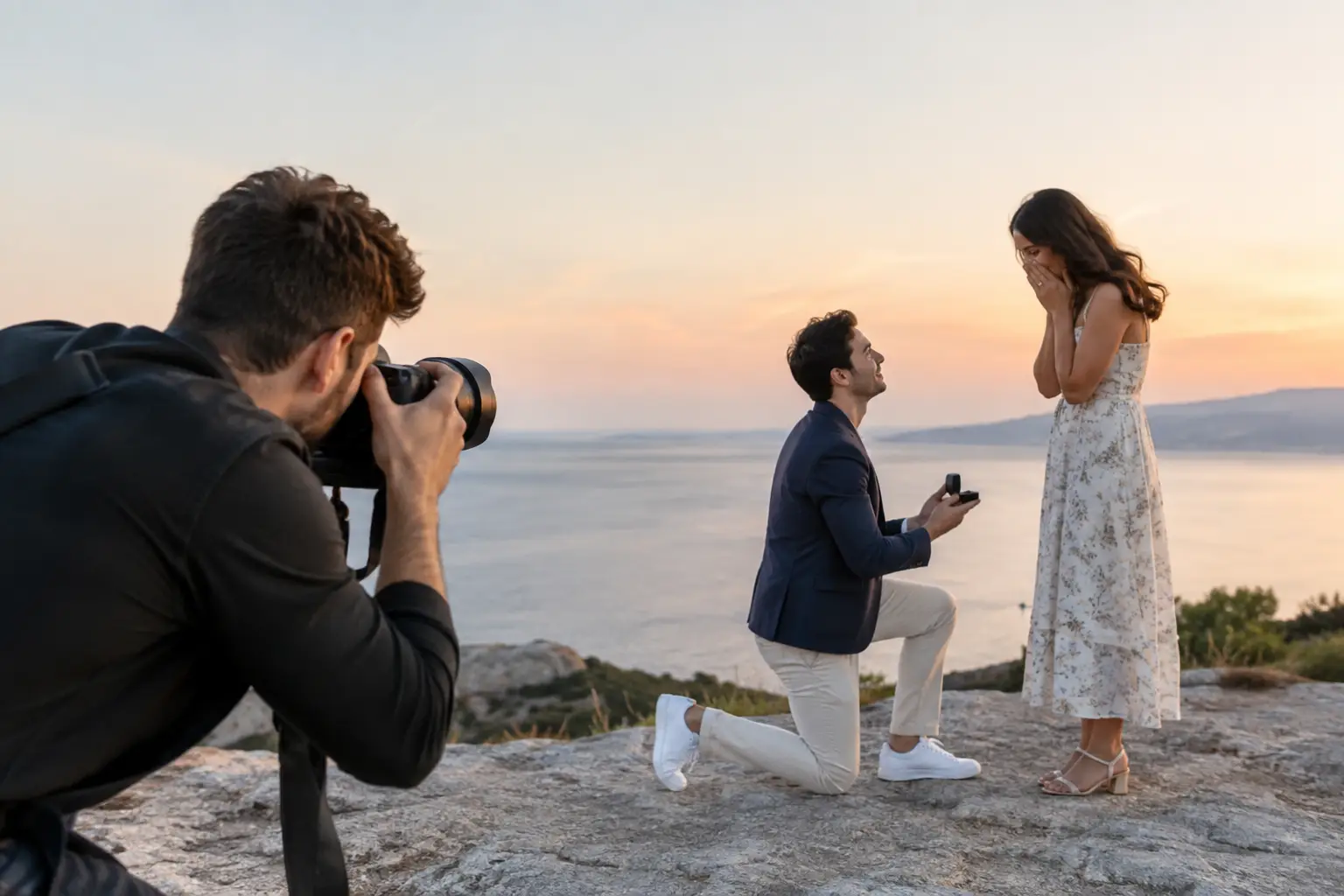
For most surprise proposals, discretion is essential. Your photographer may blend into the surroundings as a visitor, tourist, jogger, or someone simply enjoying the location. At a more formal venue, they may work with staff so they can be present without drawing attention.
This is where proposal photography differs from an engagement session. During the proposal itself, the photographer is watching from a distance and documenting rather than directing. They are looking for the approach, the first realization, the reaction to the ring, the embrace, and the often-overlooked seconds afterward when the reality of the moment begins to settle in.
A photographer should not rush in as soon as you kneel. Giving you space preserves the intimacy of the exchange and often leads to the most meaningful images. Once the initial emotion has had room to breathe, your photographer can introduce themselves, offer congratulations, and guide you into a few relaxed portraits.
Light, Timing, and Location Shape the Images
A beautiful proposal photograph is not dependent on a perfect sunset, but light does matter. Early morning and the hour before sunset generally offer softer, more flattering light than midday. They can also provide a quieter experience at popular locations.
That said, timing must work for the surprise. If a sunset proposal would require a suspiciously elaborate excuse or a rushed arrival, it may not be the right choice. A skilled photographer can create compelling images in bright daylight, on an overcast afternoon, or after dark with the city lights behind you. The right plan balances visual conditions with what feels believable and comfortable for your partner.
Consider what is happening behind you as well as in front of you. An iconic DC landmark may be meaningful, but the best angle is not always the most obvious one. A photographer will consider the background, pedestrian flow, seasonal foliage, and where your faces will be illuminated. This quiet attention to composition is what allows images to feel elevated without looking staged.
What Happens Right After They Say Yes
The proposal may be the centerpiece, but the minutes immediately afterward often produce a rich collection of photographs. You may want to call parents, open a bottle of champagne, take a walk together, or meet friends and family for a surprise celebration. Let your photographer know if any of these moments are planned.
Most couples benefit from setting aside 20 to 30 minutes for portraits after the proposal. You will already be dressed for an important occasion, your excitement is genuine, and there is no need to manufacture chemistry. Your photographer may offer light direction – where to stand, how to move toward the best light, or when to look at each other rather than the camera – while keeping the energy easy and authentic.
If you have invited loved ones to join you, consider the sequence in advance. Some couples prefer a few private portraits first, then a family reveal. Others want the entire group to appear moments after the question. Neither approach is better. It depends on whether privacy or a big shared reaction matters most to you.
Weather and Backup Plans Are Part of Professional Preparation
Washington weather can be unpredictable. Heat, rain, wind, or sudden cloud cover do not have to diminish the experience, but they do require a plan. Before the day, discuss what happens if the forecast changes. You may shift the time, move to a covered space, choose a nearby indoor option, or embrace a brief break in the rain.
The important distinction is between flexibility and indecision. A professional proposal photographer will have ideas ready, but the final choice should reflect your comfort level and the significance of the moment. If you have planned a proposal around a particular place or date, a light drizzle may be worth embracing. If the setting is unsafe or the weather is severe, rescheduling can protect both the experience and the photographs.
What to Expect From a Proposal Photographer Afterward
After the excitement settles, you should have clarity about what comes next. Your photographer should explain the expected delivery timeline, how your images will be presented, and whether you can order prints, albums, or additional artwork. Proposal photographs deserve more than a brief scroll on a phone. They become the images you share with family, use for save-the-dates, and revisit on anniversaries.
Editing should preserve the truth of the moment while refining the final image. Natural skin tones, thoughtful color, and careful attention to light create photographs that remain timeless. Heavy-handed trends can date an image quickly; a photojournalistic approach gives emotion room to lead.
At Rodney Bailey, more than 30 years of photographing milestone celebrations has reinforced one simple principle: the most memorable images come from real feeling, not rigid direction. The preparation may be detailed, but the proposal itself should still feel wonderfully unscripted.
As you make your plan, focus less on creating a perfect performance and more on creating a setting where you can be fully present. Choose a place with meaning, leave room for genuine reaction, and trust the person behind the camera to preserve the parts of the day you may be too happy to notice.
Related Posts