Can Guests Take Ceremony Photos? A Clear Answer
The moment you begin your walk down the aisle, you deserve to see the faces of the people you love – not a row of raised phones. So, can guests take ceremony photos? They can, unless you ask them not to. The better question is whether guest photography will enhance the experience you have spent so much time planning or distract from it.
There is no single right answer for every Washington, DC-area wedding. Some couples welcome candid phone photos and enjoy seeing their celebration through their guests’ eyes. Others want a fully present, phone-free ceremony and clear sightlines for their professional photographer. A thoughtful policy lets you protect the feeling of the ceremony without making anyone feel unwelcome.
Can Guests Take Ceremony Photos? Start With Your Priorities
Your ceremony is not a performance for social media. It is a brief, meaningful exchange that moves quickly and cannot be recreated exactly as it happened. Before deciding whether guests may take photos, consider the experience you want for yourselves, your guests, and the people documenting the day.
If you have chosen a historic church, an elegant ballroom, a garden, or a waterfront setting, the visual atmosphere likely matters to you. Phones held above heads can interrupt clean aisle photographs, block a parent’s view, and place bright screens into otherwise timeless images. Even well-meaning guests may step into the aisle or lean forward at precisely the wrong moment.
At the same time, a blanket ban is not essential for everyone. Perhaps you have a small, relaxed gathering where guests are already part of the visual story. Perhaps you would love a few candid images from friends during the processional or are planning a brief exit where phones are welcome. The best choice is the one that reflects your comfort level, venue guidelines, and photography priorities.
The ceremony and reception call for different rules
Many couples find that the ceremony benefits from more structure than the reception. A phone-free ceremony gives guests permission to be fully present, while an open approach during cocktail hour and the reception encourages spontaneous sharing and celebration.
That balance can be especially effective for couples who want authentic photojournalistic coverage. Once the formal ceremony is complete, guests can photograph the dance floor, embrace loved ones, and capture small moments without competing with a once-only exchange of vows. Your professional images will preserve the complete story, while guest photos add a personal, informal perspective.
Why a Phone-Free Ceremony Often Creates Better Photographs
The strongest ceremony photographs are rarely about equipment alone. They are about emotion, access, anticipation, and an experienced photographer’s ability to notice what is happening beyond the obvious. A parent wiping away a tear, a grandparent’s proud expression, or the quiet breath you take before your vows can be just as meaningful as the first kiss.
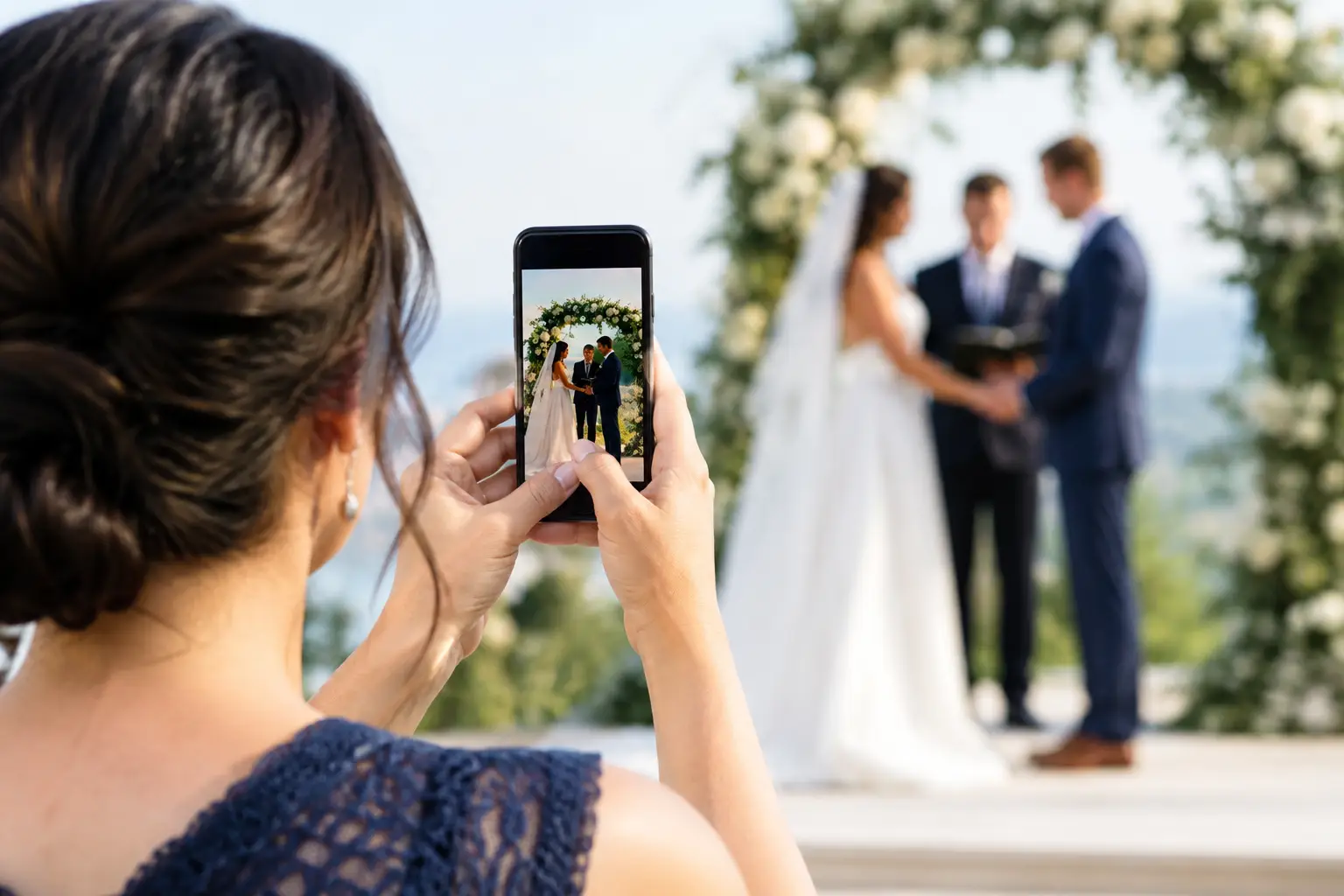
When guests are watching through their screens, those reactions can change. People often concentrate on getting the shot instead of responding naturally. They may stand in the aisle, hold a device over their heads, or move at the edge of the frame. One phone is usually manageable. Twenty phones create a visual barrier between you and the people sharing the moment.
An unplugged ceremony also protects the investment you have made in professional photography. A seasoned photographer works discreetly to anticipate moments and compose images that feel natural rather than staged. Clear pathways and unobstructed views make that work easier, but the greater benefit is emotional: the room feels connected. When your guests are present, their joy is visible in the photographs.
This does not mean every image must be perfectly controlled. Real celebrations have movement, laughter, and surprises. The goal is not perfection. It is to reduce avoidable distractions so the photographs reflect the beauty and meaning of the day, rather than a collection of screens.
Choose a Guest Photo Policy That Feels Like You
A clear policy is kinder than an unspoken expectation. Guests want to honor your wishes, but they need to know what those wishes are before the processional begins. Most couples choose one of three approaches.
A fully unplugged ceremony asks guests to put away all phones and cameras from the moment the ceremony begins until the recessional. This is ideal if you value a clean visual setting, are exchanging vows in an intimate setting, or simply want loved ones to experience the moment without distraction.
A limited-photo policy allows guests to take a quick photo before the ceremony starts, then asks them to put devices away. This gives everyone the opportunity to capture the setting and avoids the frustration some guests feel when they cannot take any photo at all. It is an elegant compromise for larger celebrations.
An open-photo policy welcomes guest photography, usually with one practical boundary: guests should remain in their seats and keep the aisle clear. This can work beautifully for casual ceremonies or for couples who prefer a less formal atmosphere. If you choose it, make sure your photographer knows in advance so they can plan angles and movement accordingly.
Whichever option you select, consistency matters. If phones are discouraged during the vows but welcomed during the recessional, say so. Specific guidance prevents uncertainty and helps guests participate confidently.
Consider the venue and the people closest to you
Some houses of worship and ceremony venues have their own rules about photography, flash, or movement. Those guidelines should be the foundation of your plan. They are often designed to preserve the dignity of the space, protect other guests’ views, and allow the ceremony to proceed without interruption.
Also consider the personalities in your guest list. If a few enthusiastic relatives are likely to move close for a better angle, a firm unplugged request can prevent an awkward moment. If your guests tend to be relaxed and respectful, a lighter message may be all you need. Your planner, officiant, and photographer can help you anticipate where extra direction would be useful.
How to Ask Guests Without Sounding Strict
The language matters. A warm request invites guests into your intention rather than making them feel corrected. Add the note to your wedding website or ceremony program, then reinforce it with a brief announcement from your officiant just before the processional.
For a fully unplugged ceremony, you might say: “We invite you to be fully present with us during our ceremony. Please silence and put away all phones and cameras. We cannot wait to share the professional photographs with you.”
For a limited approach, try: “Please feel welcome to take a photo of the ceremony setting before we begin. Once the processional starts, we ask that all phones and cameras be put away so everyone can enjoy the moment.”
For an open policy with boundaries, a simple message works well: “We are delighted for you to capture and share the day. Please remain in your seat, keep the aisle clear, and refrain from using flash during the ceremony.”
The officiant’s announcement is often the most effective part of the plan. Guests are already seated, listening, and ready for the ceremony to begin. A gracious 20-second reminder can spare you from relying on signage alone. If you are concerned about one or two family members, consider asking a trusted relative to reinforce the message privately before the day.
Coordinate With Your Professional Photographer
Share your decision with your photographer well before the wedding day. They can advise on how the ceremony location, lighting, aisle layout, and guest count may affect coverage. They may also recommend a short window after the ceremony for guests to take their own photos, particularly if there is a meaningful family tradition or a beautiful floral installation everyone will want to remember.
At Rodney Bailey, decades of wedding storytelling have shown us that the most lasting images come from a room that feels present. That does not require a rigid rule for every couple. It requires a plan that honors your priorities and gives your photographer the freedom to document genuine reactions with care.
A well-communicated photo policy is a small decision with a lasting effect. Choose the approach that lets you look up, take in the faces around you, and remember your ceremony as it felt – not as it appeared on a screen.
Related Posts