Engagement Session Guide for Natural Photos
An engagement session is not a rehearsal for performing in front of the camera. It is an opportunity to slow down, enjoy one another, and create photographs that feel like your relationship rather than a version of it. This engagement session guide is designed to help Washington, DC-area couples prepare thoughtfully while leaving room for the moments that cannot be planned—a shared laugh, a quiet glance, a hand held without being prompted, particularly when working with an engagement photographer in Washington DC.
The most memorable engagement photographs are rooted in comfort, connection, and a setting that means something to you. A refined experience does not require rigid posing or a full day of logistics. It requires a photographer who understands light, timing, and how to put people at ease, along with a few choices that let your personalities lead.
Why an Engagement Session Matters
For many couples, the engagement session is the first time they have been professionally photographed together. That alone makes it valuable. You learn how your photographer communicates, how quickly you settle into the experience, and which direction, expressions, and interactions feel most natural to you.
It also creates a foundation of familiarity before the wedding day. When your photographer already knows the rhythm between you, the wedding coverage can begin with more confidence and less self-consciousness. You are not meeting the camera for the first time while family members are arriving, the schedule is moving, and emotions are high.
The images have their own purpose, too. They can be used for save-the-dates, a wedding website, guest book, announcements, or simply displayed in the home you are building together. More than that, they preserve a distinct season: the anticipation before the celebration, when your future is taking shape but the wedding day has not yet arrived.
Engagement Session Guide: Start With a Location That Feels Personal
The right location is not necessarily the most photographed one. It is the place that supports the visual feeling you want and gives you room to be yourselves.
Washington, DC offers remarkable variety within a short distance. The Lincoln Memorial and the National Mall bring architectural scale and classic views, particularly in the quieter early morning hours. Georgetown offers texture, historic character, waterfront paths, and a sense of movement. A favorite neighborhood, a private club, an elegant hotel, a family property in Maryland, or a scenic Northern Virginia setting may tell a more personal story.
Consider the practical side as well as the aesthetic one. Some locations require permits, have restrictions around professional photography, or become crowded at certain times. A beautiful backdrop is only useful if you can move through it comfortably and have enough time to make photographs without an audience gathering around you. An experienced local photographer can help identify locations that fit the season, the light, and your desired level of privacy.
One location is often enough. Choosing two nearby settings can work well when they offer a clear contrast, such as an architectural DC location followed by a more relaxed park or waterfront walk. Trying to cover too much ground, however, can turn an otherwise easy session into a series of rushed transitions.
Consider the Light Before Choosing the Time
Light shapes the mood of every photograph. Early morning offers calm streets, cooler temperatures, and a clean, understated look. Late afternoon and the hour before sunset can be warm and romantic, though popular DC locations tend to be busier then.
The best timing depends on the location and the season. In summer, morning may be more comfortable and less crowded. In fall, a late-afternoon session can make the most of changing leaves and softer light. Flexibility is useful, especially when weather becomes a factor. A gray day can be beautiful for portraits, but a downpour or high winds may call for a thoughtful adjustment rather than forcing the plan.
What to Wear Without Looking Over-Styled
Your wardrobe should feel elevated, coordinated, and true to the way you want to remember this time. The goal is not to match exactly. It is to look as though you belong in the same photograph.
Start with a color palette instead of identical colors. Soft neutrals, rich blues, olive, burgundy, muted pinks, and earth tones tend to photograph beautifully in many DC settings. Avoid large logos, busy patterns, and neon shades that can pull attention away from your faces. Solid colors and subtle textures usually create a timeless result.
A dress, tailored suit, blazer, or polished separates can work beautifully for a more formal setting. For a more relaxed session, choose clothing that is still intentional: well-fitting denim, a quality knit, a simple dress, or an open-collar shirt paired with refined layers. Comfort matters. If you cannot walk, sit, lean in, or laugh freely in an outfit, it will show.
Many couples bring a second look. This can be worthwhile when the session includes two distinct locations or when you would like a blend of editorial polish and everyday ease. Keep the change simple, and avoid creating so many options that the session loses momentum.
Pay attention to the details that appear in close photographs. Clean shoes, neatly pressed clothing, neutral pockets, and a quick check of rings all make a difference. If professional hair and makeup helps you feel confident, schedule it with enough time to avoid starting rushed. The best styling still looks like you, just at your most rested and polished.
How to Feel Natural in Front of the Camera
The concern we hear most often is simple: “We are not photogenic.” In practice, almost no couple needs to know how to pose. They need clear, calm direction and permission to stop worrying about getting everything right.
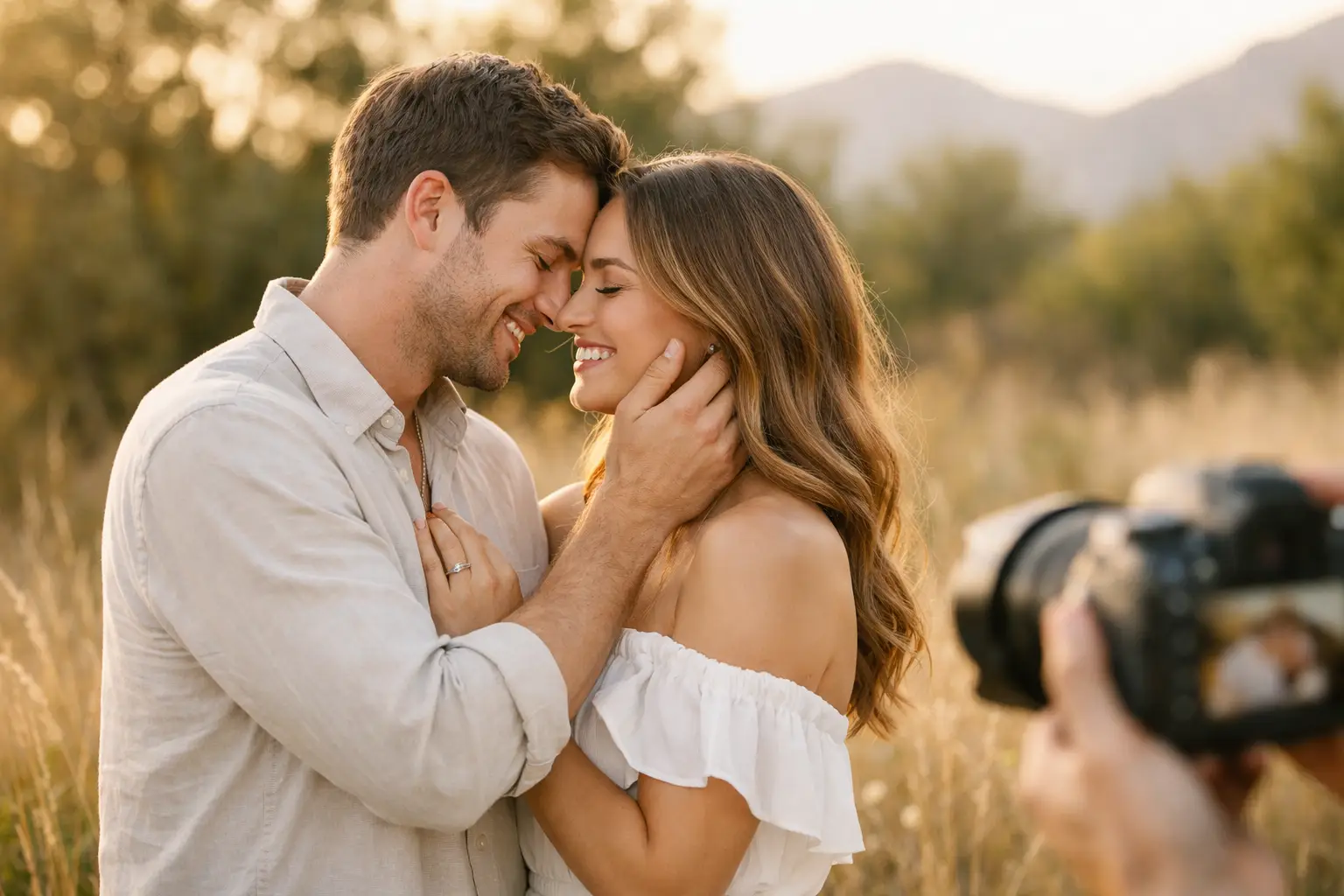
A strong photographer will guide you into flattering light and offer gentle adjustments to hands, posture, and placement. Then the most meaningful expressions emerge through movement and conversation. You may be asked to walk slowly, look at one another, tell a story, or take a moment without looking toward the camera. These are not tricks. They are ways to create enough ease for genuine connection to show.
Do not expect to be smiling in every frame. The quiet images often become favorites: a thoughtful expression, a close embrace, or the pause after you have made one another laugh. Natural photography has range. It can be joyful, elegant, playful, and intimate without feeling stiff.
Arrive a few minutes early, silence your phones, and give yourselves permission not to think about wedding tasks for the duration of the session. You do not need to entertain the camera. Focus on each other.
Bring Meaningful Details Sparingly
A meaningful detail can add context, but it should not become the subject of the session. A champagne toast, your dog, a vintage car, a favorite bookshop, or a location connected to your proposal can be lovely additions when they genuinely reflect your lives.
Pets and props require a bit of planning. Bring a friend or family member to handle a dog between photographs, and select items that are easy to carry and use. If an accessory creates more coordination than connection, leave it behind. Your relationship is already the story.
Plan for the Experience, Not Just the Images
Build a little breathing room around the session. Avoid scheduling it immediately after a demanding workday, a long drive, or an appointment that may run late. Have water available in warm weather, choose shoes that allow you to move comfortably between locations, and keep outerwear nearby if temperatures may drop.
Trust also matters when selecting your photographer. Technical skill is essential, but so is the ability to read the room, work discreetly in public spaces, and know when to direct and when to step back. With more than 30 years documenting celebrations across Washington, DC, Rodney Bailey approaches engagement photography in Washington DC as the beginning of a visual story, not a checklist of poses.
The session should feel personal from the first conversation. Share what you are drawn to in photographs, whether you prefer polished city architecture or a quieter natural backdrop, and whether there are any concerns you want addressed. The more your photographer understands what matters to you, the more confidently they can shape an experience that feels effortless.
When the session ends, do not judge it by how many poses you completed or whether every detail followed the original plan. Judge it by whether you had time to be present with the person you chose. The photographs will hold that feeling long after the location, outfit, and wedding planning season have passed.
Explore More Engagement Session Resources