Photography Styles for a Story Worth Keeping
A photograph can preserve what the room looked like. The right photographer preserves what it felt like to be there. That distinction is why photography styles matter so much when planning a wedding, proposal, mitzvah, or milestone event. Your images will become part of your family history, and the visual approach behind them shapes every memory you revisit.
For most clients, the best fit is not a single label. It is a thoughtful balance of candid observation, polished portraiture, and an understanding of when to step forward and when to disappear. The goal is not to force an event into a trend. It is to create images that feel unmistakably like your celebration.
Why Photography Styles Matter at Meaningful Events
Photography has an immediate emotional effect. Some images feel spontaneous and intimate, while others feel refined, composed, and magazine-ready. Neither is inherently better. What matters is whether the approach reflects your priorities, your guests, and the pace of your day.
A couple hosting a formal wedding at a Washington, DC, ballroom may want elegant portraits that honor the architecture and their attire, along with unguarded images from the dance floor. A family celebrating a bar or bat mitzvah may value energetic coverage of the room, heartfelt generational portraits, and every expression of pride during the service. A corporate event may call for images that are polished enough for publication but natural enough to convey real connection.
The strongest event coverage makes room for all of this. It documents the large-scale setting, the planned milestones, and the quiet moments that no timeline can predict.
The Photography Styles Most Clients Encounter
Photojournalistic photography
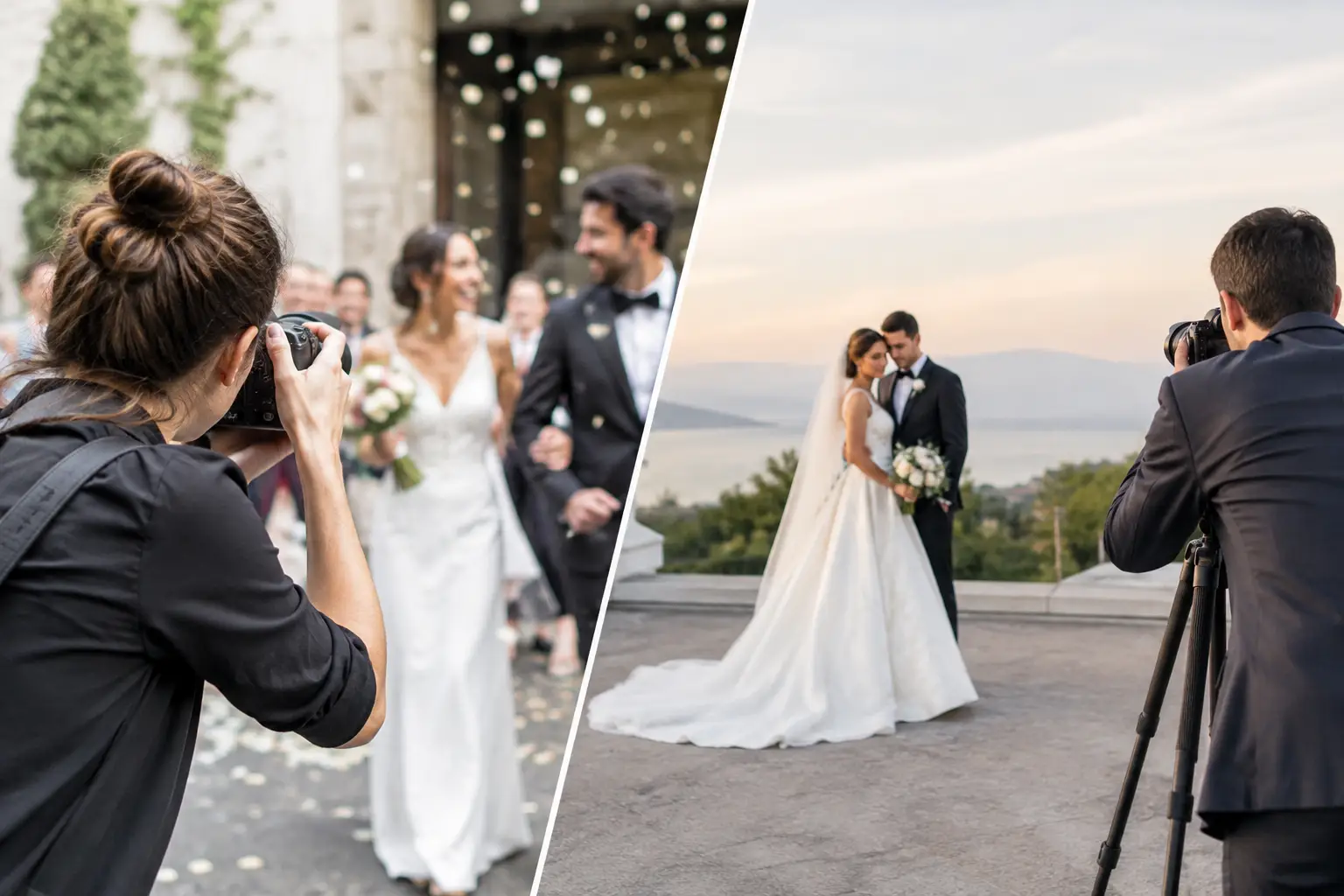
Photojournalistic photography centers on observation. Rather than directing every interaction, the photographer watches for real gestures, expressions, and relationships as they unfold. It is the style behind a parent taking a breath before a ceremony, friends reacting to a toast, or a child racing toward the dance floor without any prompting.
This approach is especially valuable during fast-moving events because it protects the natural rhythm of the experience. A skilled photojournalist anticipates moments rather than interrupting them. That takes experience, technical confidence, and a close understanding of how celebrations move from one emotional beat to the next.
There is a trade-off: candid photographs cannot be scheduled with the same precision as a formal portrait. But when handled well, they often become the images people return to most. They carry the expressions, humor, and emotion that make an event personal.
Editorial photography
Editorial photography is more intentional in its composition and direction. It may use dramatic architecture, beautiful window light, carefully arranged details, or a deliberate pose to create a highly polished image. Think of a couple framed in the entrance of a historic DC venue or a formal portrait that lets a gown, bouquet, or room design have its moment.
Editorial does not have to mean stiff. The best editorial portraits still feel connected to the people in them. Direction may be as simple as adjusting where you stand, asking you to slow down, or placing you in light that flatters the scene.
For clients who have invested in a distinctive venue, meaningful design details, or formal attire, editorial moments can give the final gallery a sense of scale and artistry. The key is moderation. If every image is heavily posed, the day can begin to feel like a production rather than a celebration.
Traditional portraiture
Traditional portraiture is the foundation of complete event coverage. These are the well-organized family groupings, wedding party photographs, and formal images that parents and grandparents often treasure for decades. They may not be the most spontaneous part of the gallery, but they are rarely optional.
The difference is in the execution. Efficient portrait direction keeps the process calm and respectful of your time. A photographer should help build a realistic portrait plan before the event, identify essential family combinations, and guide each group with confidence once the day arrives.
Good formal portraits are not simply records of who attended. They can be warm, graceful, and full of personality. The best ones make everyone look comfortable because the experience itself was handled smoothly.
Fine-art photography
Fine-art photography often emphasizes light, color, texture, and a softer visual mood. It can feel romantic, airy, cinematic, or painterly depending on the photographer’s editing and approach to composition. This style is often appealing to couples who care deeply about a cohesive visual atmosphere.
It is worth looking beyond the label. One photographer’s fine-art work may be bright and pastel, while another’s is rich, shadowed, and dramatic. Ask whether the portfolio remains true to natural skin tones and whether the look holds up across different lighting conditions. A beautiful edit should enhance the memory, not make the event feel unfamiliar years later.
Documentary event photography
Documentary coverage overlaps with photojournalism but is often broader in scope. It pays close attention to the environment, guest interactions, cultural traditions, and small details that explain how the day unfolded. At a mitzvah, that may include a grandparent’s hands holding a program, the joy of the hora, and the personalized touches that reflect the family. At a nonprofit gala, it may include speakers, supporters greeting one another, mission-focused details, and the energy of the room.
This approach is ideal for clients who want an honest, full account of their event rather than a collection of only highlight-reel moments. It values context as much as spectacle.
Choosing a Style That Feels Like You
Start with how you want to remember the day, not with a social media trend. Do you picture laughter, movement, and unscripted reactions? Do you want a few striking portraits worthy of a framed print? Are family photographs a priority? Most clients answer yes to more than one of these questions, which is why a blended approach is often the most satisfying choice.
When reviewing a photographer’s work, look at complete events whenever possible. A portfolio can show beautiful individual images, but a full gallery reveals consistency in difficult lighting, crowded rooms, formal portraits, and quiet in-between moments. You should be able to see how the photographer handles both a sunlit ceremony and a dim reception without losing the natural feel of the images.
Also consider how you want the photography experience to feel. Some people enjoy more direction and appreciate being guided through portraits. Others want to spend as much time as possible with guests. The right photographer listens to both preferences and creates a plan that supports them.
What a Timeless Approach Looks Like
Timeless photography is not the absence of style. It is style in service of the people and the story. It avoids visual choices that overpower the emotion of an image, while still using composition, light, and timing to make the moment memorable.
That is why authentic coverage often pairs naturally with refined portraiture. Your wedding album might include a beautifully composed portrait beneath the columns of a DC landmark, followed by an unplanned laugh during cocktail hour. Both belong. One honors the occasion; the other reveals the relationship.
At Rodney Bailey, this balance has guided more than three decades of wedding and event photography across Washington, DC, Maryland, and Northern Virginia. The aim is never to turn a meaningful celebration into a series of poses. It is to provide calm direction where it matters and attentive, discreet coverage everywhere else.
Questions to Ask Before You Book
Before selecting a photographer, ask how they balance candid images with formal portraits, how they work in challenging or changing light, and how they prepare for a detailed family photo list. Ask what happens if a timeline runs behind and how they approach moments that cannot be repeated.
Their answers should be specific. Experience is not only about having photographed many events. It is about knowing how to make thoughtful decisions quickly, communicate clearly with families and planners, and remain fully present when the unexpected becomes the most meaningful part of the day.
Choose photography that lets you be present now and brings you back later. Years from now, the most valuable images will not just show who was there. They will remind you how deeply it all mattered.
Related Posts