Single Photographer vs Photo Team: Best Fit?
A wedding ceremony lasts minutes. A first look may last even less. During a mitzvah, a child can be lifted into a hug while grandparents react across the room. At a corporate gala, the key exchange may happen just as guests arrive at cocktail hour. Deciding between a single photographer vs photo team is not simply a staffing question. It shapes how completely those fleeting moments are documented, how your event feels in real time, and how your final gallery tells the story.
For many Washington, DC-area celebrations, either approach can produce exceptional images. The better choice depends on the scale of the event, the number of simultaneous moments, the flow of the venue, and the kind of experience you want with your photographer.
Single Photographer vs Photo Team: What Changes
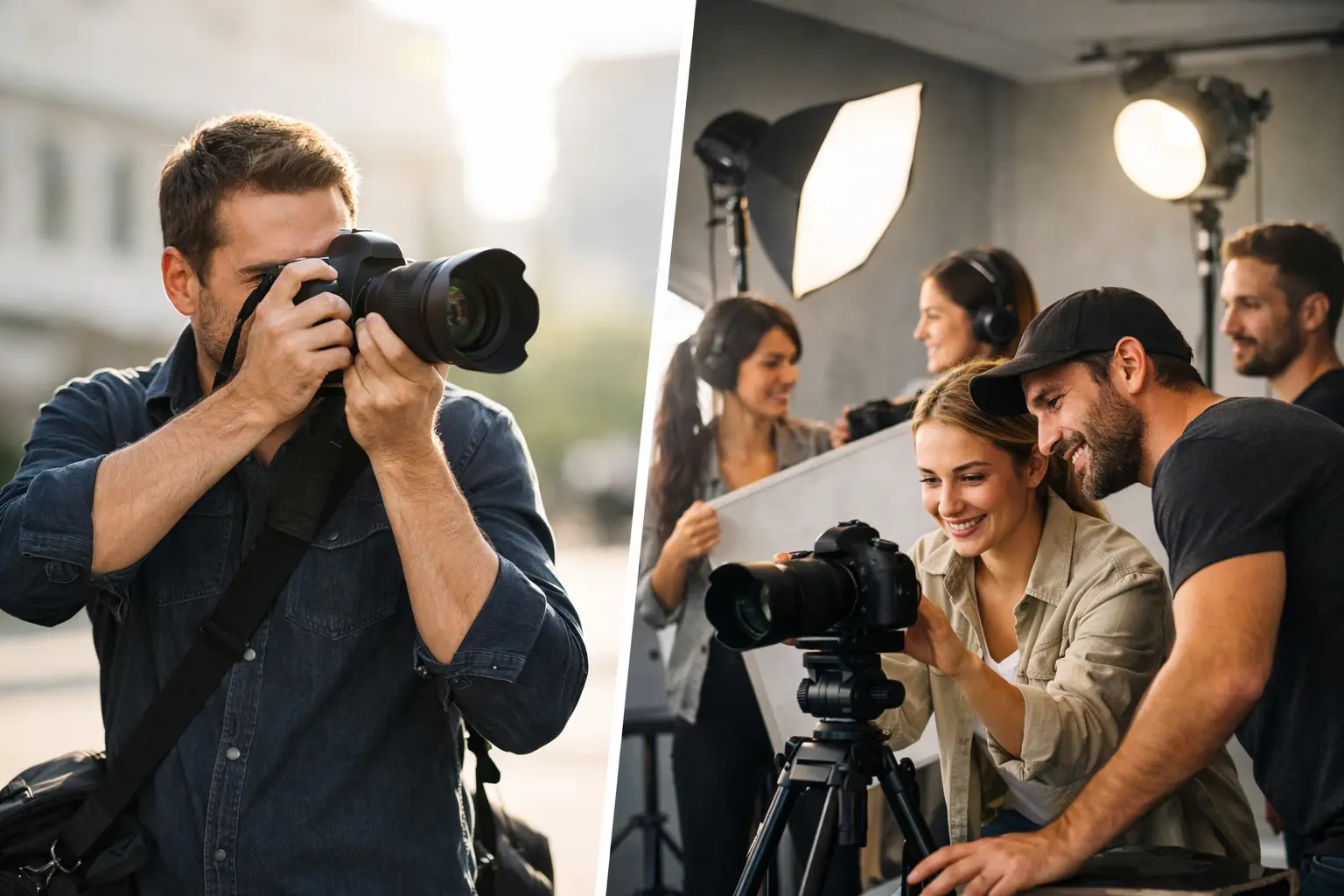
A single experienced photographer brings a singular point of view. That can be especially valuable for intimate weddings, proposals, engagement sessions, and smaller celebrations where the priority is a cohesive visual narrative rather than coverage from every possible angle. One photographer learns the rhythm of the day, reads the room quietly, and creates a gallery with a distinct, consistent sensibility.
A photo team expands the field of view. While one photographer documents a bride walking down the aisle, another can capture the groom’s expression, a parent’s tears, and the guests’ response. During a reception, one photographer may be focused on a toast while the other photographs the person giving it, the table reactions, and the atmosphere that makes the moment meaningful.
Neither model is automatically better. A large team at a small, quiet gathering can feel intrusive. A single photographer at a complex, high-energy celebration may need to make difficult choices between equally important moments happening at once. The right fit is about intentional coverage, not sheer headcount.
When One Photographer Is the Stronger Choice
One photographer is often ideal when your event has a contained guest count, a simple timeline, and a setting where everyone is naturally gathered in the same place, particularly for Washington DC event photography. An engagement session, a surprise proposal, an intimate restaurant wedding, or a small family celebration can benefit from the calm presence of one trusted professional.
There is also an intimacy to working with one photographer. Couples and families often become comfortable more quickly when there is a single person behind the camera throughout the day. That comfort matters. Natural photographs depend on genuine reactions, and people tend to relax when photography feels like a thoughtful part of the experience rather than a production around them.
A seasoned solo photographer also knows how to anticipate rather than chase moments. They can position themselves before a parent sees their child dressed for the ceremony, before the doors open for a grand entrance, or before a dance floor fills with the people who will make those photographs come alive. Experience is particularly important here. One photographer cannot be everywhere, but an observant one can be in the right place at the right time remarkably often.
For clients who value a highly edited, photojournalistic record of the day, one photographer can create a beautifully focused gallery. Instead of seeing every moment repeated from multiple angles, you receive a visual story shaped with purpose and restraint.
When a Photo Team Adds Meaningful Value
A second photographer is most useful when your event includes concurrent activity or when the experience deserves multiple perspectives. Larger weddings are the clearest example. Getting-ready coverage may take place in different locations. The ceremony may include a long processional, meaningful family reactions, and cultural traditions that unfold quickly. Cocktail hour, formal portraits, room details, and guest arrivals can all overlap.
A photo team is also a strong choice for bar and bat mitzvahs, where family portraits, religious service coverage, energetic dancing, and multigenerational guest interactions all compete for attention. One photographer can document an event with skill, but a second photographer gives the coverage more breathing room. It reduces the need to choose between a quiet candid with a grandparent and a spontaneous moment on the dance floor.
For corporate and nonprofit events, a team can be equally practical. A keynote speaker, sponsor activation, audience response, executive portraits, and branded details may all need coverage within a limited time. If the event has multiple rooms, a large footprint, or a run-of-show that moves quickly, additional photographers help ensure essential images are not left to chance.
The value is not just quantity. A good team works with coordination. Each photographer has a role, avoids duplicating the other unnecessarily, and contributes images that deepen the final story. The goal is not to place a camera in every corner. It is to preserve the full emotional and visual context of an important occasion.
Consider the Parts of Your Event That Cannot Be Repeated
The most useful way to decide is to identify where your timeline creates overlap. Consider the moments you would be disappointed to miss because they cannot be recreated naturally.
At a wedding, this might include both partners getting ready, the ceremony processional, the exchange of vows, family reactions, cocktail hour, and reception entrances. At a mitzvah, it may include service traditions, portraits with relatives, a candle-lighting ceremony, and a packed dance floor. At a proposal, a single photographer is often exactly right because discretion matters more than multiple angles.
Venue layout matters as well. A ballroom with one central reception space is very different from a museum, private estate, hotel, or multi-level venue with activity occurring in separate areas. A second photographer can cover distance and timing that no amount of talent can eliminate.
Guest count is a useful signal, but it should not be the only one. A 75-person wedding with a full day of separate preparations, a ceremony in one location, and a reception across town may need more coverage support than a 175-person event held entirely in one well-organized venue.
The Team Dynamic Matters as Much as the Number
If you choose a photo team, ask how the photographers work together. The experience should feel polished and unobtrusive, not crowded or chaotic. Clients should not have to manage the photography team or wonder who is responsible for which part of the day.
The strongest teams share a consistent approach to light, composition, candids, and client care. They communicate before and during the event, understand the timeline, and know when to step forward for a portrait and when to step back so a genuine moment can unfold. This is especially important for celebrations where family dynamics, religious traditions, or formal protocol require sensitivity and discretion.
It is also reasonable to ask who will photograph your event, whether the second photographer is experienced in independent event coverage, and how the final images will be edited for consistency, particularly for event photography in Washington DC.
Premium photography is not defined by the number of cameras present. It is defined by the quality of attention behind them.
Budget, Coverage, and the Right Priorities
A photo team generally requires a larger investment, and that investment should be tied to a clear benefit for your event. If your budget has limits, consider whether additional coverage will preserve moments that truly matter to you or whether those resources would be better applied to additional hours, an album, or a more experienced lead photographer.
For a smaller event, a single photographer with enough coverage time may be more valuable than a shorter package with two photographers. Rushing through portraits or leaving before meaningful reception moments often has a greater effect on the final gallery than adding another person to the team.
For a full-scale wedding or a complex milestone event, however, a second photographer can be one of the most practical decisions you make. It protects the story of the day when schedules shift, rooms fill, and several irreplaceable moments happen within seconds of each other.
With more than three decades of event storytelling, Rodney Bailey approaches this decision through the specifics of each celebration: your timeline, venue, family priorities, and the moments you most want to remember. The best recommendation should never be a standard package answer.
Choose the Coverage That Lets You Be Present
The right photography arrangement is the one that allows you to stop thinking about photography once the celebration begins. You should be free to take a breath before the ceremony, hold close the people who traveled to be there, and look around the room when the music starts. Whether that calls for one photographer or a coordinated team, thoughtful coverage gives your memories the attention they deserve.
Explore More Photography Insights