Wedding Album Design Guide for Lasting Stories
A wedding album should not feel like a gallery of every beautiful photograph from the day. It should feel like the day itself: the quiet anticipation, the sudden laughter, the people who showed up with full hearts, and the moment the room changed when you saw each other. This wedding album design guide is built around that idea. The goal is not simply to preserve images, but to shape them into a lasting story you will want to revisit for decades.
For couples planning weddings in Washington, DC, Maryland, or Northern Virginia, the visual pace of a celebration can move quickly – from a private first look at a historic hotel to a crowded dance floor late into the evening, particularly for Washington DC wedding photography. A well-designed album gives those moments room to breathe, without losing the energy that made them meaningful.
Start Your Wedding Album Design Guide With the Story
The strongest albums follow an emotional arc rather than a strict checklist. Chronology matters, but it is only the framework. A meaningful opening image might be the architecture of your venue, a handwritten note, a parent helping with final preparations, or a portrait that captures the calm before the celebration begins.
From there, the album should carry the reader through the day with intention: anticipation, connection, ceremony, celebration, and the release of the reception. The final pages often work best when they are quieter. A last dance, a departure, or an unguarded moment between the two of you can create a graceful ending that feels complete.
Choose the Images That Carry Feeling
Not every excellent photograph needs to be in the album. The most memorable designs are selective. They include the images that reveal character, relationships, atmosphere, and movement, alongside the essential portraits and milestone moments.
When narrowing a collection, look beyond whether an image is technically beautiful. Ask what it adds to the story. Does it show your grandmother’s expression during the vows? Does it capture the warmth of your friends at dinner? Does it place you in the setting you chose so carefully? Images with emotional context often become more valuable over time than another variation of the same formal portrait.
A useful balance is to include signature images that stand beautifully on their own, then support them with smaller moments that give the page life. A photograph of a bride adjusting an earring may become more meaningful beside a wide image of the room, a close-up of a parent’s hands, and the expression of a friend watching nearby.
Edit With Confidence
Couples often worry that choosing fewer photographs means leaving out too much. In practice, thoughtful editing creates a more powerful experience. Repetition weakens momentum, particularly when several images show the same pose, hug, or dance-floor scene.
Choose the strongest version of each moment, then make room for contrast. Pair an expansive ceremony image with an intimate reaction. Follow polished portraits with a candid laugh. Let an energetic reception spread lead into a simple, quiet image. This variation is what makes an album feel like a story rather than a highlight reel.
Decide on Album Size and Scope Early
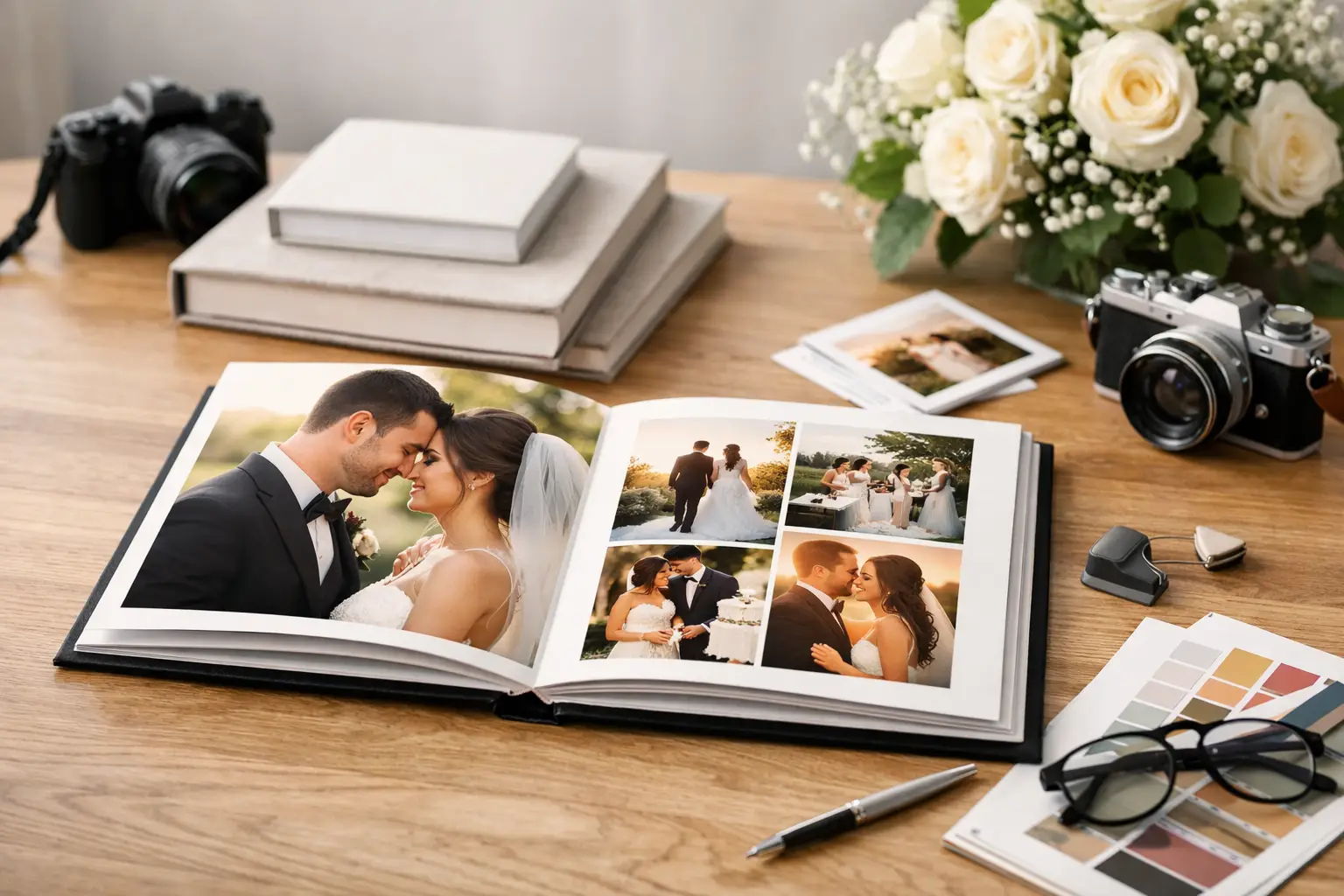
Album dimensions, page count, and materials influence how the story can be told. A larger album gives formal portraits, sweeping venues, and layered reception scenes greater presence. A more intimate size can feel personal and inviting, particularly when the design centers on emotional documentary images.
There is no universal right choice. A black-tie celebration at a grand DC venue may call for a larger format and more generous page count. A smaller wedding with a highly personal guest list may benefit from a more concise book with fewer, more deliberate images. The question is not which option is more luxurious. It is which format best reflects the scale and spirit of your day.
Parent albums deserve similar consideration. They do not have to be exact replicas. A parent may treasure additional family portraits, while your own album may lean more heavily into the two of you, your friends, and the full rhythm of the celebration.
Build Pages That Let Photographs Breathe
A refined album design uses space as carefully as it uses photographs. A page with one remarkable image can be as compelling as a spread with several. Full-page and full-spread images are especially effective for scenes with scale: a ceremony processional, a dramatic venue interior, a joyful room full of guests, or a portrait in beautiful light.
Smaller image groupings have their place, too. They work well for getting-ready details, cocktail hour, the sequence of a first look, and dance-floor moments where the energy comes from accumulation. The key is restraint. A crowded page can make even exceptional images feel hurried.
Use Pacing, Not Symmetry, as Your Rule
Not every spread needs the same number of images, and not every page needs to mirror the one beside it. A uniform grid may look orderly, but it can flatten the emotional rhythm of the day. Instead, let each chapter determine its own pace.
Early pages may be more spacious and observant. The ceremony can slow down around the processional, vows, and recessional. Portrait pages can feel elegant and uncluttered. Reception design can become more animated, with tighter crops and a greater sense of movement. This progression helps the album feel natural from beginning to end.
Pay attention to the center fold as well. Avoid placing faces, hands, or other essential details directly across it when possible. A beautiful spread should remain easy to experience in print, not merely attractive on a screen.
Give People Their Proper Place
Your wedding is about the two of you, but it is also about the community surrounding you. Include the people whose presence shaped the day: parents before the ceremony, siblings during a toast, friends who transformed the dance floor, and guests whose reactions reveal the atmosphere in the room.
This does not mean attempting to include every attendee equally. It means ensuring the album reflects the relationships that matter most. Years from now, those photographs may carry an emotional weight that formal groupings alone cannot provide.
Choose Materials That Suit How You Live
An album is meant to be held, opened, shared, and occasionally passed around a room after dinner. Premium materials protect the photographs while making the experience feel substantial. Consider a cover that complements your aesthetic without relying on a passing trend. Classic leather, linen, and clean contemporary finishes can all be excellent choices when they fit the tone of the wedding and your home.
Keep customization personal but restrained. Names and a date can be timeless. A meaningful phrase can work beautifully if it is genuinely yours. The most enduring covers tend to be elegant enough that they will still feel right years from now.
Paper choice also affects the final result. Matte finishes often suit photojournalistic imagery and offer a soft, tactile quality. Glossier surfaces can add vibrancy, particularly to images with rich color and evening light. Your photographer or album designer can help you compare the options in relation to your actual photographs, not just a sample swatch.
Review the Design for Story, Not Just Favorite Images
The proofing stage is where a good album becomes a deeply personal one. Review it first as a complete experience. Turn the pages in order and notice where you pause, where the energy builds, and whether any sequence feels repetitive or abrupt.
Then review the details. Confirm names, dates, and any cover text. Check that must-have family members and meaningful moments are represented. Look for duplicate images that can be replaced with something more revealing or more intimate.
It is helpful to gather feedback from one trusted person if you want a second perspective, but too many opinions can dilute the design. Your album should reflect your memories and priorities, not become a committee project. A professional designer can guide the process, offer a clear point of view, and make changes without losing the visual coherence of the book.
Make Time for the Album After the Wedding
The months after a wedding can fill quickly with travel, work, thank-you notes, and settling into married life. Still, it is worth beginning the album process while the details remain vivid. You will remember why a particular glance mattered, which song brought everyone to the floor, and how the room felt just before the ceremony began.
At the same time, do not rush choices simply to finish. The best designs come from a thoughtful collaboration between couple and photographer, with enough distance to recognize which moments truly endure. At Rodney Bailey, that storytelling perspective has guided wedding coverage for more than three decades: authentic images, carefully edited into a record that feels unmistakably like the people in it, particularly when working with a Washington DC wedding photographer.
Your album will outlast changing displays, devices, and social feeds. Choose the photographs that bring you back to the feeling of the day, then give them a home worthy of the memory.
Related Posts