How to Plan First Look Photos Without Rushing
The moment one partner turns around and sees the other fully dressed for the wedding is rarely about choreography. It is about anticipation finally giving way to recognition. Knowing how to plan first look photos well gives that moment the privacy, time, and calm it deserves – while also making the rest of the wedding day feel far less rushed.
A first look is not required, and it is not the right choice for every couple. But for couples who want natural photographs, meaningful time together, and a more flexible portrait schedule, it can be one of the most valuable decisions in the day’s timeline.
Start With the Experience You Want
Before deciding where a first look will happen or how much time to reserve, talk about what you want the moment to feel like. Some couples want a quiet exchange with no one else nearby. Others want the energy of a grand setting, a city view, or the architecture of their venue in the background. Neither approach is more meaningful. The best choice is the one that feels like you.
A first look is often especially appealing for couples who are getting ready at the same venue, have a later ceremony, or want to attend part of cocktail hour. It creates an opportunity to be together before the ceremony and can ease the nerves that naturally build during separate preparations.
That said, waiting until the ceremony has its own emotional power. If seeing each other for the first time while walking down the aisle has always felt essential, honor that instinct. Excellent wedding photography begins with an honest plan, not a trend or a schedule that belongs to someone else.
How to Plan First Look Timing
The most common mistake is treating the first look as a five-minute item on a crowded timeline. The reveal itself may be brief, but the emotional reset afterward is part of its value. Build in enough time for the couple to connect, speak naturally, and simply take in the moment.
For most weddings, plan for the first look to begin about two and a half to three hours before the ceremony. Reserve 20 to 30 minutes for the reveal and a few portraits together immediately afterward. If you would like to complete wedding party and family portraits before the ceremony, allow additional time based on the size of those groups and the distance between locations.
A thoughtfully structured pre-ceremony timeline might include 30 minutes of individual finishing photographs, 20 minutes for the first look, 30 to 45 minutes for couple portraits, and another 45 to 60 minutes for wedding party and immediate family portraits. The exact sequence depends on the venue, the season, available light, and whether everyone is getting ready nearby.
In Washington, DC, Northern Virginia, and Maryland, travel time can be a significant consideration. A portrait location that looks close on a map may involve loading a wedding party onto transportation, navigating traffic, and finding a suitable place to unload. Keeping the first look near the ceremony or reception venue usually protects the relaxed pace you want.
Leave a Buffer Before the Ceremony
Aim to have formal photographs complete at least 30 minutes before guests begin arriving, when possible. This buffer gives everyone time to freshen up, hydrate, use the restroom, and settle into the ceremony without feeling hurried.
It also protects against the unexpected: a delayed hair and makeup schedule, a missing boutonniere, a traffic issue, or a family member who needs a few extra minutes. A calm timeline is not empty time. It is the margin that allows real moments to happen without turning the day into a production.
Choose a Location That Feels Private, Not Isolated
The ideal first look location has visual character, flattering light, and enough privacy for the couple to be present with each other. It does not need to be elaborate. A quiet garden path, an elegant interior corridor, a terrace, a window-lit room, or a shaded corner of the venue can be more effective than a busy landmark.
Privacy matters because people respond differently when they know guests, wedding party members, or passersby are watching. A secluded location allows for a genuine reaction rather than a performance. It also gives the photographer room to document the moment discreetly from a respectful distance.
Light should guide the choice as much as scenery. Midday sunlight can be harsh, especially in open outdoor locations. Look for open shade, a covered walkway, a courtyard with soft reflected light, or an indoor area with large windows. If your first look must take place in direct sun, positioning and timing can still make a beautiful result, but it requires more care.
Ask your venue coordinator whether the selected location will be open to guests, vendors, or other events at that time. A beautiful staircase loses some of its intimacy when it becomes a service corridor. Your photographer can help identify alternatives during a venue walk-through or planning conversation.
Keep the Reveal Unscripted
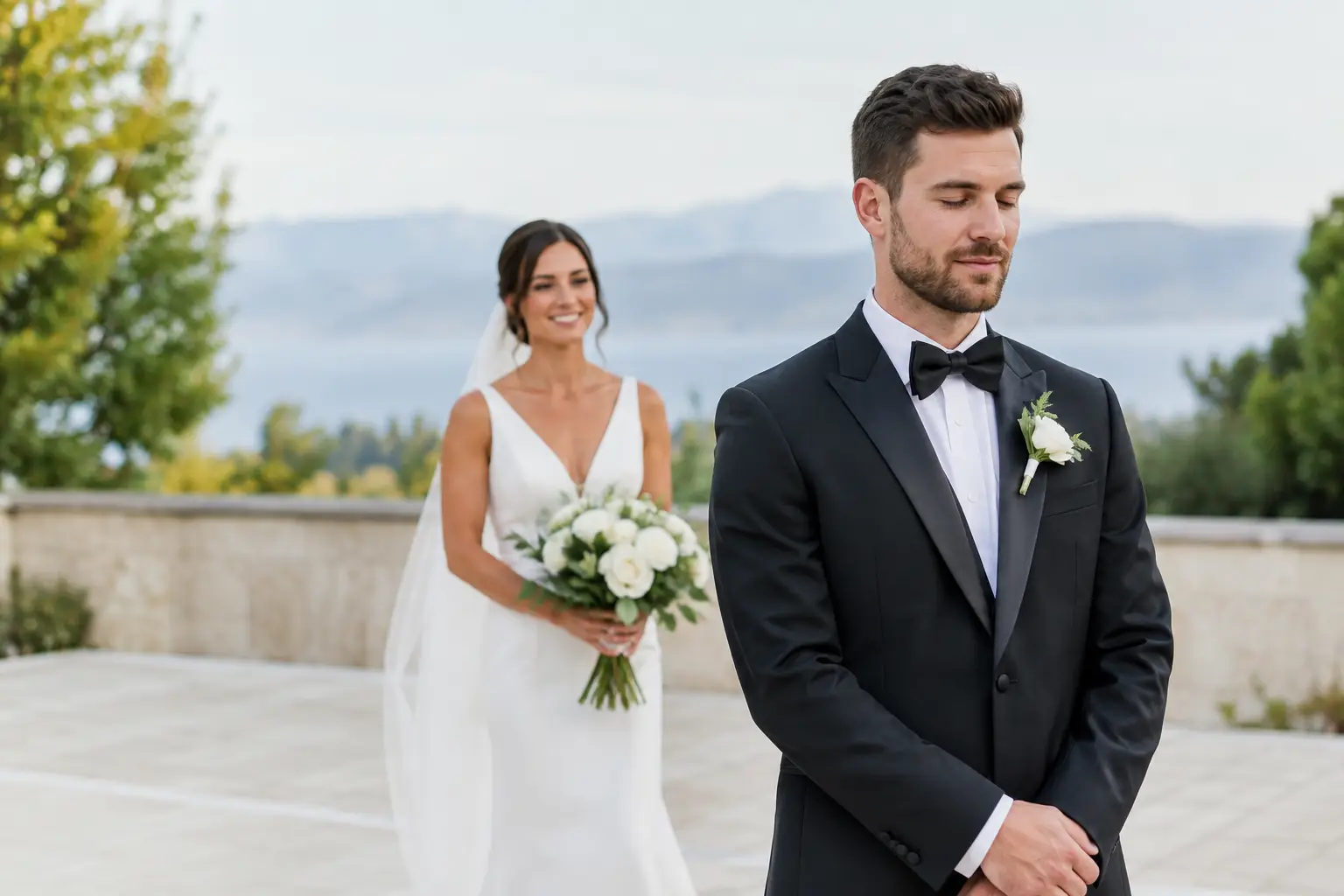
A first look does not need a complicated setup. Usually, one partner stands facing away while the other approaches, taps a shoulder, or simply says their name. Then the photographer steps back and lets the moment unfold.
Avoid trying to prescribe the reaction. You may cry, laugh, hold each other quietly, or immediately start talking about the ceremony. All of those responses are real, and all of them make meaningful photographs. The goal is not to create a particular expression. It is to create the conditions where you can react naturally.
If you are exchanging private vows, letters, or gifts, decide in advance whether the first look is the right setting. These additions can be deeply personal, but they also extend the schedule. Give them room rather than squeezing them between the reveal and the first portrait location. A brief handwritten note can be perfect; a long gift exchange may be better saved for a quieter point in the day.
Consider Who Should Be Present
Most couples benefit from keeping the first look limited to the two of them and the photo team. A planner or coordinator may need to be nearby to manage logistics, but family and friends should generally remain out of sight until the moment has passed.
There are exceptions. A child may be part of the reveal, or a couple may want a parent or grandparent to witness it. If that is meaningful to you, include them intentionally. The key is to make the choice because it reflects your relationships, not because it seems expected.
Plan Portraits Around Energy, Not Just Efficiency
One of the practical benefits of a first look is the ability to take many portraits before the ceremony. This can free you to enjoy cocktail hour, greet guests, or take a short breather after the ceremony. But efficiency should not flatten the experience.
Schedule the first few minutes after the reveal for just the two of you. These portraits tend to have an ease that is difficult to recreate later, when guests are waiting and the reception is about to begin. Afterward, bring in the wedding party and immediate family for organized group photographs.
Provide your photographer with a concise list of essential family combinations before the wedding. Keep it focused on the groupings that matter most. A clear list, designated family helper, and a nearby gathering point can make formal portraits move quickly without making anyone feel processed.
Even when most portraits happen before the ceremony, reserve 10 to 15 minutes later in the day for sunset or evening portraits if the schedule allows. The softer light and the fact that you are already married can bring a different, often more relaxed feeling to the images.
Coordinate the Details That Affect the Photographs
Small decisions have a visible impact on how smoothly a first look unfolds. Make sure bouquets, boutonnieres, jackets, veils, and other key details are ready before the scheduled start. If one partner is still being dressed while the other is in position, the moment can become unnecessarily tense.
Ask the wedding party to stay out of the first look area and silence phones. Well-meaning friends often want to capture a behind-the-scenes video, but extra cameras can pull attention away from the couple and create distractions in the background.
If a veil is part of the plan, ask whether you would like it placed before or after the reveal. Putting it on beforehand creates a complete wedding-day entrance. Waiting until afterward can protect the veil during travel and allow for a slightly different reveal. There is no universal answer; it depends on the look you value most and the conditions at the venue.
Experienced photojournalistic coverage is especially valuable here. The best first look images are not only the tap on the shoulder. They include the breath beforehand, the hands reaching for each other, the laughter after the tears, and the quiet walk away together. After more than 30 years documenting celebrations, Rodney Bailey Photography approaches those unscripted seconds with the discretion and preparation they require.
Trust the Plan Enough to Be Present
A first look works best when it feels protected from the clock, even though it is carefully planned. Once you arrive at the location, resist the urge to ask what comes next or whether the schedule is on track. Let your planner, photographer, and wedding party handle the logistics.
Take a breath before the reveal. Look at each other for longer than you think you need to. Say what comes to mind. The schedule can guide the day, but the photographs you treasure will come from the moments when you forget it is there.
Give your first look the same consideration you would give the ceremony itself: a setting that feels right, enough time to be fully present, and the freedom to respond exactly as you are. That is where the most lasting images begin.
Related Posts