Engagement Session Wardrobe Guide for Couples
The best engagement photographs do not begin with a pose. They begin with two people who feel like themselves. This engagement session wardrobe guide couples can use is designed to remove the uncertainty around what to wear, so your attention stays where it belongs: on each other, the setting, and the excitement of what comes next.
Your wardrobe should feel elevated, not costumed. A well-chosen look brings visual cohesion to an image while leaving room for authentic expressions, movement, and connection. After more than 30 years of photographing celebrations throughout Washington, DC, Northern Virginia, and Maryland, we have seen that the most timeless sessions are rarely built around a trend. They are built around confidence, comfort, and thoughtful coordination.
Start With the Feeling You Want to Remember
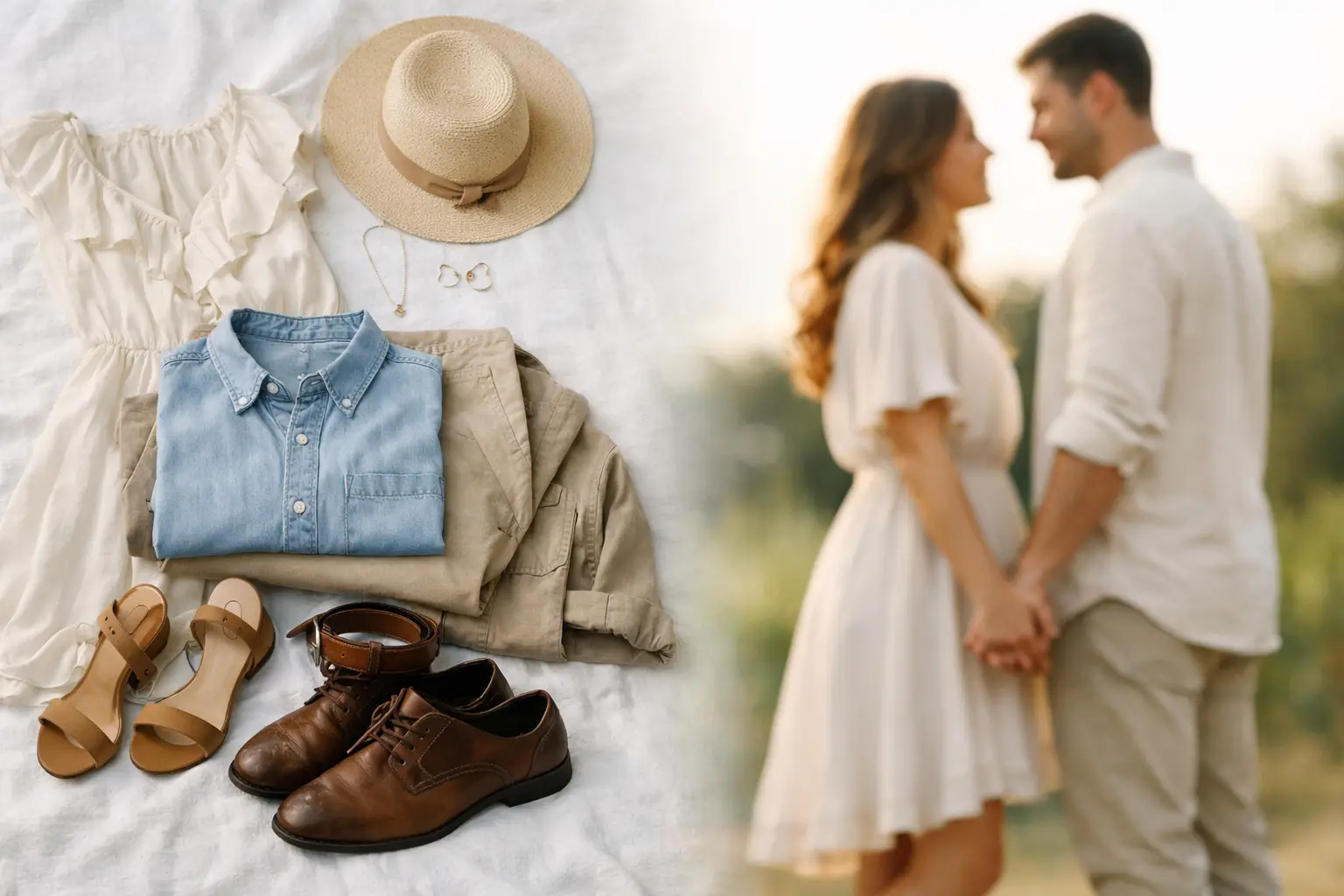
Before choosing colors or shopping for a new outfit, consider how you want the images to feel. A tailored suit and a silk dress may suit a formal evening in Georgetown. Relaxed linen, a soft knit, and refined denim may feel more natural for a quiet morning at the National Arboretum or a walk through your own neighborhood.
Neither approach is inherently better. The right choice depends on your relationship, your venue, the season, and how you genuinely dress when you want to feel your best. An engagement session is a portrait of this chapter in your life, not an audition for a version of yourselves you do not recognize, particularly for engagement photography in Washington DC.
It can help to choose three words that describe the intended mood: classic, intimate, editorial; or relaxed, warm, and modern. Let those words guide every decision. If an item is beautiful but does not fit the feeling, it will likely feel disconnected when you see the final gallery.
Coordinate, Do Not Match
The strongest couple portraits have harmony without looking overly planned. Rather than wearing identical colors or matching patterns, choose a shared palette with complementary tones and varied textures. Think navy with soft blue and camel, ivory with olive and warm brown, or charcoal with muted rose and taupe.
Start with one person’s anchor piece, such as a dress, jacket, or textured knit, then build the other outfit around it. This is often easier than selecting two outfits independently and trying to make them work later. If one person wears a patterned piece, the other should generally wear a solid or a very subtle texture.
Avoid high-contrast combinations that divide the frame, such as a bright white top beside a very dark black outfit, unless that contrast is an intentional part of your style. Softer tonal relationships photograph with more ease and keep the focus on your faces.
Choose Colors That Work With the Location
Washington, DC offers remarkably varied backdrops. Pale stone architecture, tree-lined parks, historic streets, waterfront views, and private residences all respond differently to color. A bright red dress might make a powerful statement against a neutral cityscape, while it can compete with peak autumn foliage. A soft blue or sage green may feel beautiful in a garden but disappear against a similarly colored backdrop.
You do not need to predict every background. Your photographer will guide you toward flattering light and complementary compositions. Still, choosing colors with some contrast to your setting gives the photographs depth. Neutral does not have to mean beige from head to toe. Deep jewel tones, warm earth tones, dusty pastels, and layered neutrals often create a sophisticated result.
Prioritize Fit and Movement
Photography records more than how clothing looks when you stand still. It captures the way a jacket pulls when you embrace, how a skirt moves as you walk, and whether you can sit comfortably together without adjusting every few seconds.
Try on your complete outfit several days before the session. Walk, sit, raise your arms, and practice a close embrace. Check the fit from different angles in natural light. Clothing that is too tight can limit movement and create tension; clothing that is too loose can look less intentional in photographs. Tailoring is often a better investment than buying something more elaborate.
For dresses and skirts, consider the wind, stairs, and walking routes. A flowing silhouette can be exceptionally beautiful, but it should be manageable. For suits, sport coats, and button-downs, make sure the shoulders and sleeve lengths fit properly. Small details such as a crisp collar, hemmed trousers, and polished shoes make a meaningful difference in a finished image.
Bring a Second Look Only If It Adds Value
A wardrobe change can give your gallery visual range: one refined look and one more relaxed look, for example. It is especially useful when your session includes two distinctly different locations or when you want photographs that can serve different purposes, from save-the-dates to framed artwork.
There is a trade-off. Changing clothes takes time and can interrupt the natural rhythm that develops once you settle into the session. For many couples, one exceptional outfit is more than enough. If you bring a second look, keep it simple and plan for a practical changing option. A jacket, overshirt, or accessory change can sometimes create variety without a full reset.
Keep Accessories Intentional
Accessories should support the overall look, not become the subject. A meaningful watch, delicate jewelry, a refined belt, or a favorite pair of heels can add personality and polish. Choose items you would be comfortable wearing for an extended period, especially if the session involves walking.
Pay close attention to footwear. Shoes are visible more often than couples expect, and they influence posture and comfort. Select a pair that fits the tone of the outfit and the terrain. If you are photographing on cobblestones, grass, or a waterfront path, bring a more practical option for walking between locations.
Be cautious with oversized logos, novelty graphics, and highly reflective fabrics. These can date an image or pull attention away from your connection. The exception is a piece that genuinely represents you, such as a sentimental jacket or an accessory with personal significance. Authenticity is always more compelling than a generic rule.
Prepare for the Camera Without Overdoing It
Professional hair and makeup can be a worthwhile choice, particularly if it helps you feel composed and camera-ready. The goal is not to look unlike yourself. Ask for a polished version of your everyday style, with attention to longevity and a finish that will hold up in changing weather.
For both partners, a few small preparations go far: clean and press clothing, remove empty pockets and visible tags, tidy nails, and bring a lint roller. If you wear glasses, clean the lenses and consider whether glare has been an issue in past photographs. If you are considering a new haircut or a significant beauty treatment, schedule it far enough ahead that it feels natural by the session date.
A Practical Engagement Session Wardrobe Guide for Couples
The most reliable formula is simple: wear clothing that fits beautifully, coordinate your colors rather than matching them, and choose pieces you can move in naturally. Then leave room for the unexpected moments that make the photographs personal – the laugh after a missed step, the quiet glance while walking, the way you instinctively reach for one another.
Weather may require adjustments. DC summers can be humid, so breathable fabrics and an extra layer for air-conditioned interiors can be useful. In cooler months, structured coats, scarves with subtle texture, and elegant layers can photograph beautifully. Check the forecast, but do not let it dictate every choice. A prepared couple with a flexible attitude often creates the most memorable images.
Your engagement session is also an opportunity to build comfort with your photographer before the wedding day , particularly when working with an engagement photographer in Washington DC. At Rodney Bailey, the goal is never to force a performance. It is to create a relaxed, thoughtfully guided experience where your natural connection has room to show. Choose clothing that lets you forget about clothing, and the photographs will carry the feeling of this moment for years to come.
Related Posts