How to Plan Bridal Party Photos Without the Rush
The few minutes after a ceremony can move faster than almost any other part of a wedding day. Guests are ready for cocktails, family members are looking for the couple, and the wedding party may be eager to celebrate. The key to plan bridal party photos well is not to create a longer list of poses. It is to protect the right amount of time, choose locations wisely, and give your photographer room to capture both the polished portraits and the laughter in between.
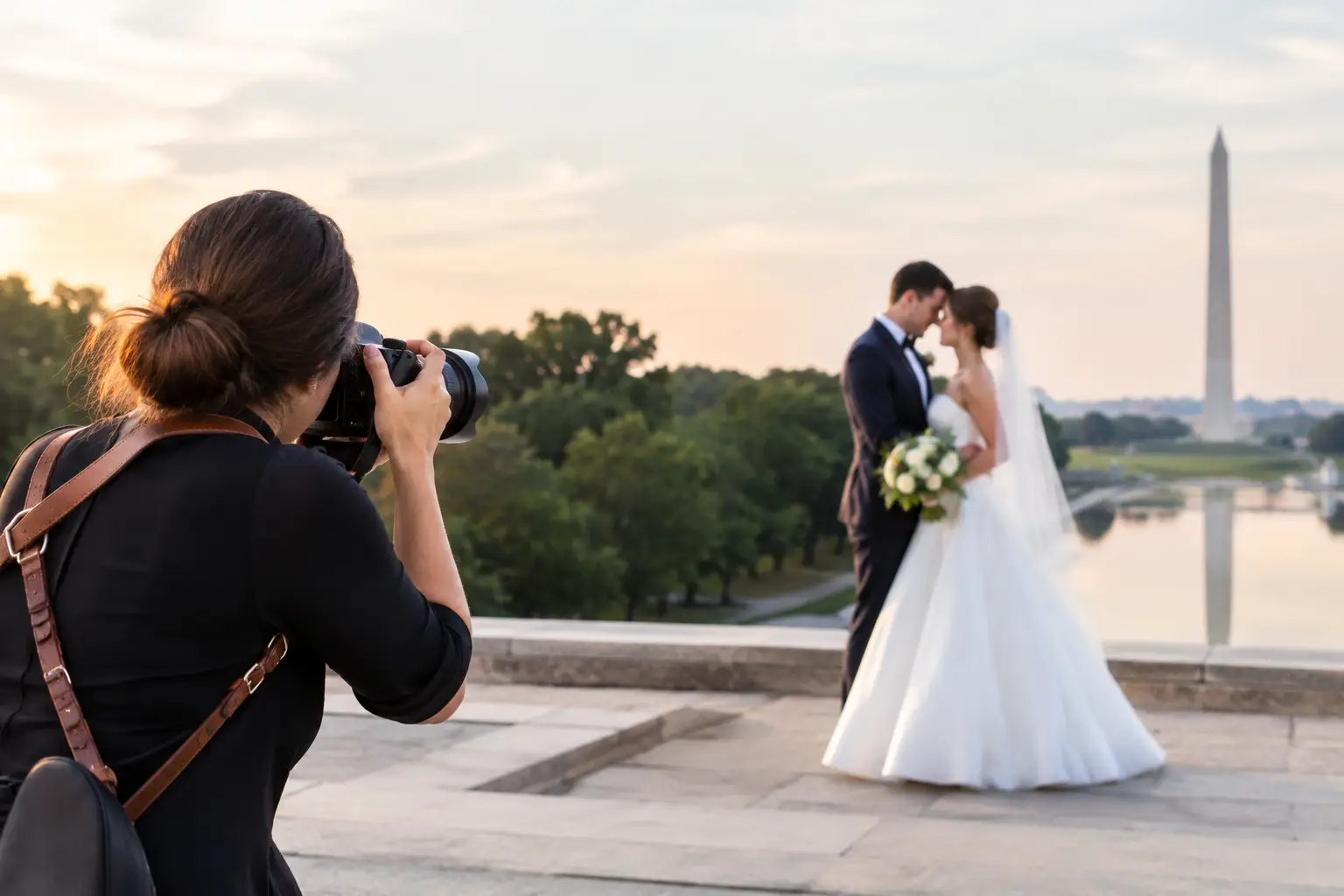
For couples planning a Washington, DC, Northern Virginia, or Maryland celebration, logistics matter, particularly for Washington DC wedding photography. Traffic, historic venue restrictions, changing weather, and a full guest experience can all affect the portrait schedule. With thoughtful preparation, bridal party photographs can feel efficient, elegant, and genuinely reflective of the people who stood beside you.
Start With the Light, Then Build the Timeline
A beautiful bridal party portrait begins with timing, not posing. Your photographer should consider the ceremony time, the season, the venue’s orientation, and the location of cocktail hour before recommending a portrait window. Midday summer light can be bright and unflattering in open spaces, while a late-fall wedding may lose daylight well before dinner begins.
Many couples schedule bridal party photos immediately after the first look, before the ceremony. This approach often creates the calmest experience. Everyone is dressed, hair and makeup are fresh, and the wedding party has not yet dispersed into greetings and pre-ceremony activity. It also lets the couple attend part, or all, of cocktail hour after the ceremony.
That said, a first look is personal, not mandatory. If you prefer to see each other for the first time at the ceremony, reserve a realistic block afterward. For a wedding party of eight to 12 people, allow approximately 25 to 35 minutes for group portraits, plus travel time if you are leaving the venue. Larger parties, multiple locations, or a desire for more editorial portraits may warrant 45 minutes or more.
Do not use every available minute for formal arrangements. A strong timeline includes a small buffer for delayed transportation, a missing boutonniere, touch-ups, or simply a breath between moments. The photographs tend to look more relaxed when the people in them are not watching the clock.
Plan Bridal Party Photos Around a Simple Shot List
A shot list is useful when it clarifies what matters. It becomes counterproductive when it turns every portrait into a checklist. Before the wedding, share the essential combinations with your photographer: the full wedding party, each partner with their attendants, the couple with the full group, and any relationships that deserve special attention, particularly when working with a Washington DC wedding photographer.
For example, you may want a portrait with a sibling who is also a bridesmaid, a longtime college group, or a best friend who has been part of your relationship from the beginning. Those requests are meaningful and easy to accommodate when they are communicated in advance. On the other hand, a list of 30 nearly identical groupings can consume the very time needed for natural photographs.
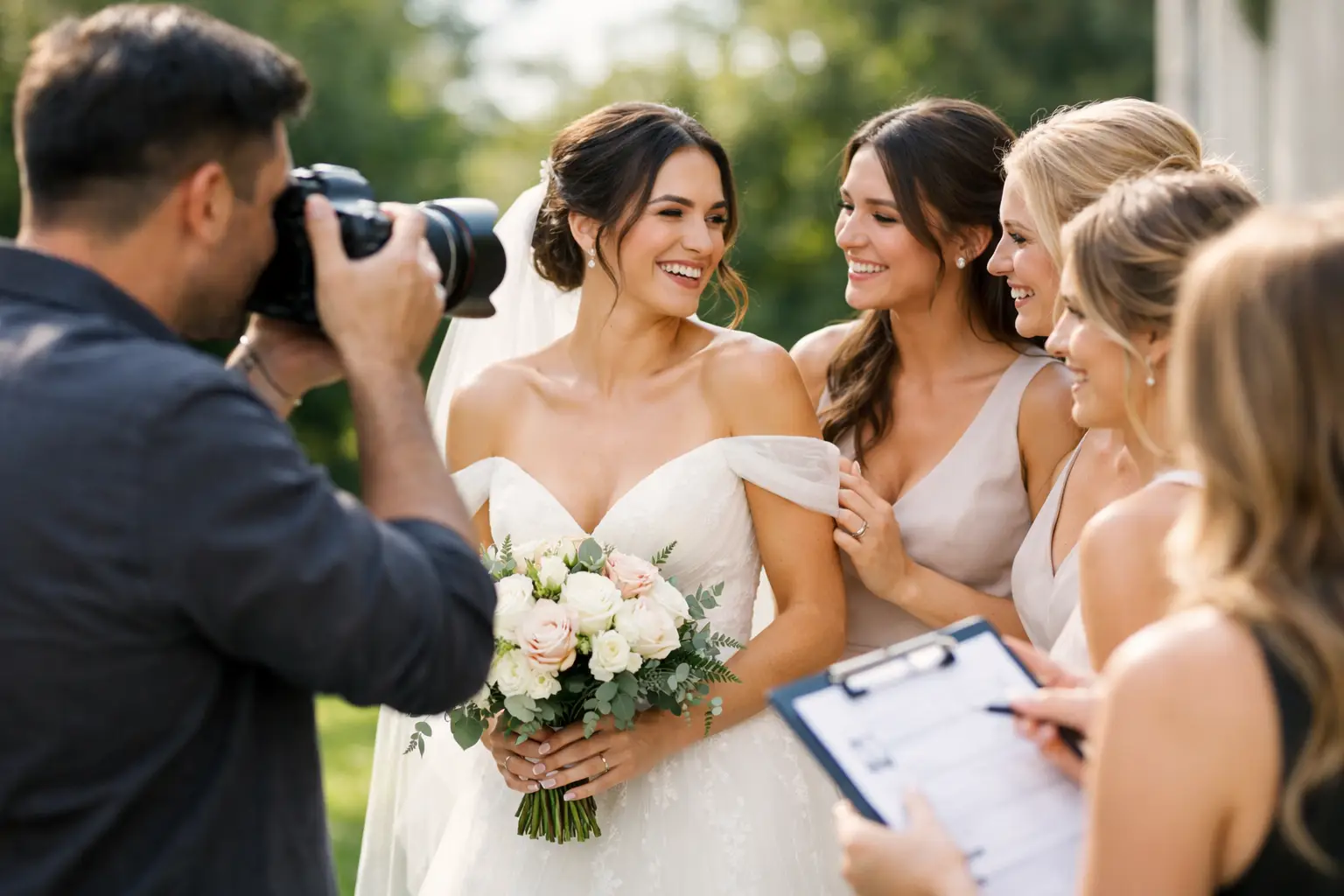
The best approach is to identify priorities, then trust an experienced photographer to create variety through composition, movement, and observation. After the essential portraits are complete, the most memorable frames often happen when the wedding party starts talking, straightening one another’s attire, or reacting to an off-camera joke.
Keep the Groupings Intentional
Bridal party portraits do not need to follow one rigid formula. A traditional full-group photograph is worth having, but it should not be the only image. Consider a mix of standing and seated arrangements, closer portraits that show connection, and a few wider images that incorporate the architecture or landscape that made you choose your venue.
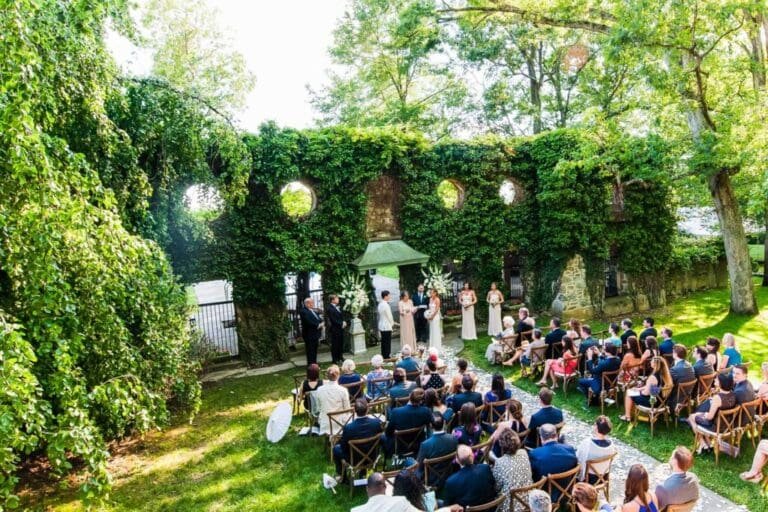
The setting should support the photograph rather than compete with it. A grand staircase, a quiet garden path, a marble corridor, or a distinctive DC streetscape can add a sense of place. But if reaching it requires a 15-minute walk in formalwear, an elevator queue, and a complicated return route, the trade-off may not be worthwhile. Often, the strongest location is close by, beautifully lit, and easy for the group to access.
Make It Easy for Everyone to Be Ready
The wedding party is more likely to be present and comfortable when expectations are clear. Let everyone know when and where portraits begin, whether they need to travel, and who is responsible for gathering the group. Ask them to keep bouquets, jackets, ties, and personal items close at hand before photo time.
Choose one reliable point person who is not part of the wedding party, such as a planner, venue coordinator, or trusted relative. Their role is simple: help locate people quickly and keep the group moving while the photographer stays focused on making photographs. This is especially helpful for large celebrations, where someone may be visiting the restroom, greeting family, or unexpectedly pulled into another task.
A few practical details make a visible difference. Have water available in warm weather. Keep a small touch-up kit nearby for lipstick, blotting papers, and stray pins. Ask attendants to put phones away during the formal portrait block unless they are needed for a specific family update. The goal is not to police anyone’s fun. It is to avoid a row of distracted faces in an image that should feel timeless.
Leave Room for Personality, Not Just Poses
A wedding party was chosen for a reason. They are siblings, friends, confidants, and the people who have witnessed your relationship take shape. Their personalities should be part of the visual story.
Share a little context with your photographer before the day. Perhaps your friends are reserved and will appreciate gentle direction. Maybe they are energetic and will naturally create a more celebratory atmosphere. There may be a sentimental connection to the venue, a funny shared tradition, or a meaningful heirloom worth noticing. These details help guide the photography without forcing a performance.
Direction still matters. Even candid-looking group portraits require attention to posture, spacing, hands, bouquets, and where people are looking. The difference is that refined direction should not make people appear frozen. A photographer can organize the group, refine the composition, and then allow a moment to unfold. That balance is where natural images come from.
At Rodney Bailey, more than 30 years of wedding storytelling has reinforced a simple truth: the photographs couples return to are rarely only the perfectly arranged ones. They are also the quiet glance before the ceremony, the friend fixing a veil, and the full-bodied laugh that could not have been planned.
Coordinate Portraits With the Guest Experience
Your portrait plan should serve the entire wedding day, not interrupt it. If cocktail hour is important to you, a first look and pre-ceremony wedding party portraits may be the better fit. If tradition calls for portraits after the ceremony, consider extending cocktail hour slightly or arranging for private drinks and hors d’oeuvres to be brought to the wedding party.
Be realistic about travel between sites. In the DC area, a route that looks simple on a map can become unpredictable because of motorcades, sporting events, road closures, or rush-hour traffic. If off-site portraits are a priority, build in more time than you think you need and have a weather alternative that is genuinely appealing, not merely acceptable.
Also consider older relatives, guests with mobility needs, and the venue’s flow. A portrait plan that keeps the couple hidden for an hour after the ceremony may be perfectly right for one celebration and frustrating for another. There is no universal formula. The best choice reflects your priorities and gives your guests confidence that the day is moving with intention.
A Final Check Before the Wedding Day
In the week before the celebration, confirm the portrait timeline, locations, transportation, and names of the people who should be present. Tell your photographer about any recent family changes or sensitive dynamics so groupings can be handled with discretion. Make sure the planner, videographer, and venue team understand the sequence as well.
Then, when portrait time arrives, let the plan do its work. Gather your people, take a moment to look around at them, and resist the urge to manage every detail yourself. The most lasting bridal party photographs are not proof that everything ran perfectly. They are a record of being fully surrounded by the people who made the day feel like yours.
Explore More Expert Wedding Photography Advice